Windows are no longer mere apertures in a wall; they are architectural statements, instruments of comfort, and guardians of efficiency. For the design-conscious homeowner, selecting window types is less about filling an opening and more about composing a view—balancing proportion, light, privacy, and performance with deliberate intent.
Below, we explore how thoughtful window type selection can transform a home from simply well-appointed to truly exquisite, highlighting five exclusive insights that sophisticated renovators and custom builders quietly rely on.
The Architectural Dialogue: Matching Window Types to Your Home’s Language
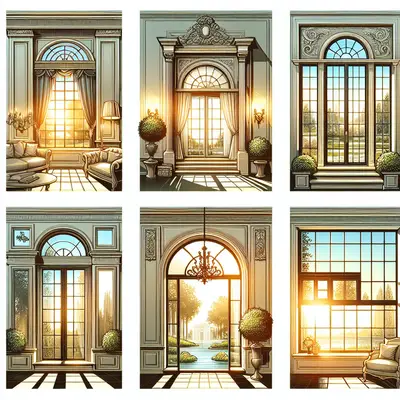
Every window type—casement, awning, double-hung, picture, slider, tilt-turn, or specialty shape—carries an architectural dialect. The most refined homes are those in which the window program speaks fluently with the building’s style, era, and scale.
Casement windows, with their clean vertical lines and unobstructed glass, harmonize beautifully with contemporary, Scandinavian, and transitional designs. Their ability to open fully on a side hinge also offers an elegant, almost “door-like” relationship to the outdoors, ideal for framed garden or courtyard vistas.
Double-hung windows, by contrast, nod to traditional craftsmanship—think historic townhomes, colonial façades, or pre-war apartments. Their balanced upper and lower sashes create a rhythm that suits symmetrical elevations, millwork details, and classic trim profiles.
Picture windows and large fixed panels function as visual punctuation marks. Used sparingly and strategically—flanking a fireplace, anchoring a stair landing, or crowning a double-height living room—they create a sense of grandeur and calm, offering a gallery-like frame to the landscape.
Exclusive Insight #1:
Discerning designers often mix window types within a single project, but they do so by “zoning” usage—casements for primary views and ventilation, fixed windows for dramatic vistas, and specialty shapes as architectural accents—rather than randomly scattering types across the façade. This creates subtle cohesion without visual monotony.
Light as a Luxury Material: Choosing Types to Shape Daylight and Mood
The most luxurious homes treat daylight like a design material—modulated, layered, and intentional. Window type plays a decisive role in how light enters a room and how it feels throughout the day.
Floor-to-ceiling fixed or tilt-turn windows can flood an interior with luminous, gallery-level light, ideal for art, sculptural furniture, and minimalist spaces. Meanwhile, operable casement and awning windows can be placed higher in the wall to introduce softer, ambient light, reducing glare on work surfaces or screens.
Double-hung and slider windows, with their horizontal meeting rails, can subtly segment views and light, which may be desirable in bedrooms or more intimate spaces where a touch of enclosure is welcome. Awning windows installed higher on the wall can maintain privacy while still capturing daylight and breezes, particularly in urban settings or tight lot lines.
Exclusive Insight #2:
High-end projects often pair different window types in the same room—such as a large fixed picture window for the main view, flanked by slim casements or tilt-turn units for ventilation. This “paired strategy” yields the visual calm of large glass expanses while maintaining fine-tuned control of airflow and comfort.
Performance, Quiet, and Comfort: The Hidden Strengths of Specific Types
A refined window upgrade is as much about invisible comfort as visible beauty. Different window types inherently influence energy performance, sound reduction, and draft control—details that distinguish an adequate upgrade from a truly exceptional one.
Casement and awning windows, which close by pressing the sash firmly into the frame, often provide superior air sealing compared with many sliding configurations. This can be critical in climates with intense heat, cold, or wind, and in homes where energy efficiency and acoustic comfort are non-negotiable.
Fixed windows, with no operable components, offer the tightest seals and lowest potential for air and water infiltration—an advantage in highly exposed elevations or large-format glazing walls. When combined with advanced low-e coatings and gas fills, they become powerful tools in maintaining stable interior temperatures.
Tilt-turn windows—common in high-performance European design—excel in both sealing and versatility. The tilt position enables secure ventilation from the top, while the turn function provides a full side-hinged opening for cleaning and maximum airflow.
Exclusive Insight #3:
In acoustically demanding environments—near busy roads, flight paths, or dense urban zones—specifying casement or tilt-turn units instead of traditional sliders can yield noticeably quieter interiors, even before layering in specialized acoustic glazing. The compression seal inherent in these types often outperforms sliding tracks for sound control.
Luxury in the Details: Operations, Hardware, and Everyday Rituals
The true luxury of a window is often experienced in the everyday ritual of using it. The type you select determines how a window moves, feels under hand, and integrates with custom hardware—subtle qualities that quietly elevate a space.
Casement and awning windows invite finely engineered handles and concealed hinges, lending themselves to minimal sightlines and refined finishes—brushed nickel, satin brass, blackened steel—that coordinate with high-end hardware and lighting schemes. Their single, intuitive motion feels tailored and deliberate.
Tilt-turn units offer a distinctly “engineered” experience: a single handle position dictates tilt, turn, and lock. This sense of mechanical precision resonates with homeowners who appreciate craftsmanship in everything from cabinetry hinges to luxury appliances.
Double-hung and slider windows, when designed with slender profiles and well-balanced sashes, can feel effortlessly smooth, but they require careful selection to avoid the clunky, builder-grade feel that undermines an otherwise premium interior.
Exclusive Insight #4:
Sophisticated homeowners often differentiate hardware finishes by zone: a soft, warm metal (such as brushed brass or bronze) on interior-facing casement or tilt-turn levers, and a more resilient, low-maintenance finish (such as black anodized or stainless) for exterior or high-exposure locations. Window type selection should anticipate this hardware strategy, ensuring compatible mechanisms and profiles from the outset.
Curated Privacy and Framing: Using Window Types to Edit the View
The most thoughtfully designed homes are not those with the largest windows everywhere, but those with edited, curated views. Window types provide a toolkit for controlling what is revealed, what is softened, and what is intentionally obscured.
Awning windows excel in maintaining privacy while still connecting to the outdoors; placed high on walls in bathrooms, stairwells, and side yards, they admit air and light without direct sightlines. Narrow vertical casements or tilt-turn units can be used as “view slits,” framing a tree, a courtyard, or a sculptural exterior element.
Fixed clerestory windows can float daylight above eye level, illuminating ceilings and upper walls while shielding the interior from neighboring properties. Specialty shapes—arched, trapezoidal, or corner glass units—serve as visual focal points, drawing the eye toward the most compelling parts of a property and away from less desirable surroundings.
Exclusive Insight #5:
In premium projects, designers often deploy smaller, deliberately placed window types on secondary elevations (side yards, service areas) to control privacy and focus investment where it matters most—such as large-format fixed or tilt-turn units in primary living spaces. This intentional hierarchy of window types balances budget with high-impact moments, ensuring that every window serves a specific experiential purpose.
Conclusion
Choosing window types for an elevated home is less about selecting from a catalog and more about composing a symphony of light, comfort, and architectural intent. Casements, awnings, tilt-turns, picture windows, sliders, and specialty shapes each offer distinct strengths—how they seal, how they move, how they shape light, and how they frame your world.
By thinking beyond basic functionality and embracing the nuances of each window type—its performance, aesthetics, operation, and role in privacy and view—you transform windows from background elements into carefully curated design instruments. The result is a home that not only looks refined, but also feels quietly, consistently exceptional in everyday living.
Sources
- U.S. Department of Energy – Energy-Efficient Window Attachments – Overview of energy performance considerations and how window design influences comfort and efficiency.
- Efficient Windows Collaborative – Window Types and Performance – Detailed explanations of common window operating types and their impact on energy use and comfort.
- University of Minnesota – Choosing Windows for Energy Efficiency – Educational guidance on window selection, including performance, climate, and design factors.
- Building America Solution Center (energy.gov) – High-Performance Windows – Technical insights into high-performance window assemblies and their role in building envelopes.
- Andersen Windows – Window Styles – Manufacturer overview of various window styles and operation types, with examples of applications.
Key Takeaway
The most important thing to remember from this article is that this information can change how you think about Window Types.