Windows are no longer mere openings in a wall—they are curated frames for the way you live. The right window type can quietly orchestrate light, airflow, privacy, acoustics, and even how your furnishings age over time. For homeowners considering an upgrade, the question is not simply “Which window?” but rather “Which experience do I want this room to deliver every day?”
This guide explores window types through a more refined lens—how they shape your home’s atmosphere, how they perform over time, and how to make decisions that feel deliberately tailored, not just technically correct. Along the way, you’ll find five exclusive, under-discussed insights that design-conscious homeowners particularly appreciate.
The Character of Each Window Type: Beyond Basic Definitions
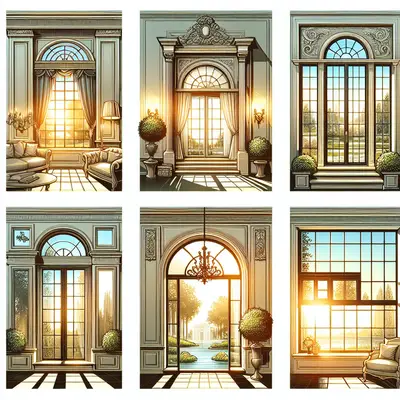
Most guides stop at basic descriptions—casement, double-hung, picture, slider. But for a discerning home, the subtleties of how these windows behave matter as much as their names.
Casement windows, hinged at the side and operated by a crank, offer a sense of precision. They seal tightly when closed, which is ideal for energy performance and comfort. Their ability to “scoop” breezes from a specific direction gives them a surprisingly architectural role in rooms where air movement is part of the desired experience.
Double-hung windows, with two operable sashes, embody balance and tradition. Their vertical lines complement classic façades, but they also offer nuanced control over airflow—opening both top and bottom can encourage warm air to escape while drawing cooler air in.
Picture windows provide a stillness that is both visual and acoustic. They do not open, which makes them exceptionally good at framing a view and minimizing mechanical lines, handles, and hardware. Used thoughtfully, they can create a gallery-like quality in living spaces or reading nooks.
Sliding windows and doors introduce a horizontal language, ideal for mid-century or contemporary homes. They create an understated connection to the outdoors, particularly when paired with slim profiles and large expanses of glass.
Awning, bay, bow, and specialty-shape windows function almost like punctuation in a composition—used selectively, they can transform an ordinary elevation into something quietly memorable.
Exclusive Insight #1: How Window Type Subtly Edits Your Daylight
Most homeowners think of light levels, but fewer consider how different window types shape the light itself.
Fixed picture windows behave like large lenses for daylight. Because there are no meeting rails or divisions unless you choose them, light enters in a broad, even wash—ideal for showcasing artwork, textiles, and natural stone without harsh visual interruptions.
Casement windows, with their slimmer frames and capacity for larger single panes, often allow more glass-to-frame ratio than traditional double-hung units of similar overall size. This becomes especially important in rooms where natural light is meant to replace daytime artificial lighting, such as home offices, studios, and living spaces designed for daytime entertaining.
Double-hung windows, by contrast, subtly segment the light plane. The horizontal meeting rail can create a soft division in the light entering the room, which can be visually pleasing in traditional interiors but may feel less seamless in minimal or modern spaces.
Awning windows placed high on a wall can deliver daylight without sacrificing privacy. Above eye level, they create an elevated band of light that washes ceilings and upper walls, making a room feel taller, calmer, and more enveloped.
When considering window types, think not just about how much light you’ll get, but where that light will fall at different times of day—on seating, on work surfaces, on art, or on reflective finishes you may want to avoid.
Exclusive Insight #2: The Ventilation Signature of Each Window Type
Every window type has a distinct “ventilation signature”—a pattern of airflow and comfort you’ll notice most on still, warm days.
Casement windows excel when you want to direct breezes. Because the sash opens outward like a door, it can be angled to catch crosswinds from specific directions. In coastal or hillside locations where breezes are predictable, this can feel almost like a natural air-conditioning system.
Double-hung windows shine in temperate or transitional climates. Opening just the top sash can allow warm air to escape while preserving privacy at eye level, which is especially useful in urban settings or on street-facing façades. In bedrooms, this can create gentle overnight ventilation without a noticeable draught at bed height.
Awning windows are uniquely suited to climates with intermittent rain. Their top-hinged design means they can often remain open during light showers, maintaining fresh air without risking water intrusion. Placed over a tub or kitchen countertop, they offer discreet ventilation where a full-height opening might be impractical.
Sliding windows provide a direct, lateral flow of air, which can be useful when they align with doors or other openings to create deliberate cross-breezes. Their simplicity makes them well-suited to large, wide openings where vertical sashes would feel visually busy.
In a sophisticated window plan, you’re not just mixing styles for aesthetics—you’re curating how different rooms “breathe” throughout the year.
Exclusive Insight #3: Pairing Window Types to Protect Your Interiors
High-end finishes—hardwood floors, wool rugs, leather upholstery, artwork—age differently depending on their exposure to sunlight, humidity, and temperature swings. The right combination of window types can quietly protect your investment.
Picture windows with high-performance glazing are ideal for rooms with valuable furnishings or curated art walls. Because they remain closed, they minimize humidity fluctuations, dust entry, and the small drafts that can affect both textiles and fine wood over time. Paired with low-E coatings and UV-filtering glass, they act as guardians for fabrics and finishes.
Operable windows—casement, awning, or double-hung—can be positioned to provide targeted ventilation away from the most delicate items. For example, placing operable windows near circulation paths (hallways, kitchen, entry) while using fixed or limited-operation units near heirloom pieces can reduce the environmental stress those items endure.
Bay and bow configurations, especially when combining fixed and operable segments, allow you to position seating, reading nooks, or display surfaces in zones of more controlled light. A fixed center picture unit with operable flanking windows can bring in air without exposing the central focal point to as much UV and temperature variation.
Over time, these substantive but subtle decisions can be the difference between furnishings that fade and warp prematurely, and a home that acquires a graceful patina instead of visible sun damage.
Exclusive Insight #4: Visual Quiet vs. Architectural Drama
Refined design is often about knowing where to be expressive and where to be quiet. Window types strongly influence this balance.
In spaces where you want the view or interior finishes to be the star—such as a dramatic landscape, a sculptural staircase, or a statement fireplace—picture windows and minimal-frame systems offer visual quiet. Their simplicity reads as confidence: the architecture isn’t competing for attention, it’s framing it.
In more formal or traditional rooms, double-hung windows with divided lites can add a tailored, almost sartorial structure. The grid pattern echoes millwork, wainscoting, and paneling, reinforcing a sense of order and craftsmanship.
Casement and awning windows, especially with slim profiles and concealed hardware, bridge classical and modern aesthetics. They can disappear into the architecture from the interior while reading crisp and intentional from the exterior.
Specialty-shape windows—arches, circles, angled tops—should be used in a highly curated way. One strategic feature window can become an architectural signature; too many can dilute the overall effect and make the façade feel restless. The most luxurious homes often show restraint, using distinctive shapes only where they elevate a particular volume or interior vignette.
By consciously choosing which rooms need drama and which need calm, you can select window types that support the emotional narrative of the home rather than competing with it.
Exclusive Insight #5: Future-Proofing with Window Types, Not Just Materials
Future-proofing is usually discussed in terms of glass coatings and frame materials, but window type itself plays a quiet role in long-term adaptability.
Casement and awning windows often provide superior air sealing when closed, which translates into better energy performance as building codes and standards become more stringent. Their compression seals age differently from the sliding or friction-based seals found in some other types, which can matter in harsher climates.
Double-hung windows with tilt-in sashes can make maintenance dramatically easier over time, which is particularly relevant for upper stories or homes without easy exterior access. The ability to clean from the inside can reduce the need for frequent professional cleaning, an operational cost often overlooked at the selection stage.
Large-format sliders and lift-and-slide systems can support evolving lifestyles—opening entire walls to outdoor living areas that may be added or upgraded later. Choosing these systems now, even if your current outdoor space is modest, can give you future flexibility without reworking the building envelope.
Modular combinations—such as stacked awnings over fixed units, or flanked picture windows paired with operable narrow casements—allow you to adjust shading, treatments, and privacy solutions over time without altering the original window rough openings.
In a well-considered upgrade, you’re not just optimizing for this year’s energy bill; you’re choosing window types that will remain aligned with both your lifestyle and future standards for comfort, performance, and design.
Conclusion
Selecting window types is not merely an exercise in matching architectural terms to openings. For a discerning homeowner, it is an act of curation—of daylight, of airflow, of views, of privacy, and of how your interiors age and perform over time.
By looking beyond surface-level descriptions and considering how each window type behaves—how it edits light, shapes ventilation, protects materials, balances visual quiet and drama, and anticipates future needs—you can create a home that feels intentionally composed at every aperture.
The most luxurious windows are not always the most conspicuous. They are the ones that make every room feel precisely as it was meant to feel, every day, in every season.
Sources
- U.S. Department of Energy – Energy-Efficient Window Attachments – Overview of how different window solutions impact efficiency and comfort
- Efficient Windows Collaborative – Window Types and Operation – Technical breakdown of common window types and their performance characteristics
- National Fenestration Rating Council (NFRC) – Explains performance ratings (U-factor, SHGC, etc.) relevant to different window designs
- University of Minnesota – Daylighting in Buildings – In-depth look at how window design influences daylight quality and interior comfort
- Marvin Windows & Doors – Window Types – Manufacturer resource illustrating varied window types and their typical applications
Key Takeaway
The most important thing to remember from this article is that this information can change how you think about Window Types.