The right window is never just an opening in a wall—it is a calibrated instrument for light, comfort, and architectural character. For homeowners pursuing a refined upgrade, the conversation moves far beyond “double-hung or casement?” to a more nuanced dialogue about proportion, performance, and the way glass choreographs daily life. This article explores window types through a sophisticated lens, highlighting five exclusive insights that discerning homeowners often overlook—but absolutely should not.
Reading the Architecture: Matching Window Types to Design Heritage
Every architectural style carries an inherent “visual grammar,” and window types are some of its most eloquent punctuation marks.
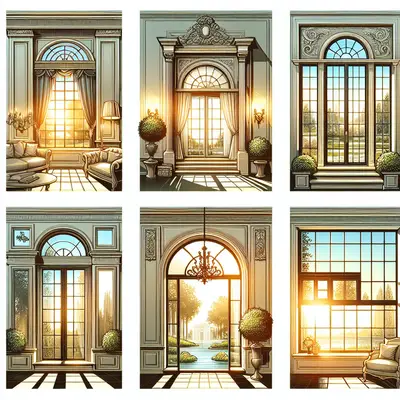
In traditional homes—Georgian, Federal, Colonial Revival—double-hung windows with divided lites are more than a stylistic nod; their vertical rhythm, balanced sashes, and slender profiles echo the symmetry and restraint of the façade. In contrast, mid-century or contemporary architecture typically favors large, fixed picture windows paired with narrow casements or awnings, creating long, uninterrupted sightlines and emphasizing horizontality.
Understanding this relationship prevents expensive aesthetic missteps. For instance, inserting bulky sliding windows into a classic brick townhouse can flatten the façade and cheapen its character, even if the performance specs are impressive. Conversely, in a contemporary home, well-placed fixed panels with minimal frames can transform entire walls into curated vistas, elevating both interior and exterior perception.
The most successful upgrades begin by asking: What visual story is this home already telling—and which window types reinforce, rather than contradict, that narrative? A skilled window designer or architect will often blend types—fixed, casement, awning, and specialty shapes—to keep the exterior coherent while fine-tuning light, ventilation, and privacy room by room.
Exclusive Insight #1: Treat window selection as architectural editing, not mere replacement. Choose types that deepen the home’s original design language instead of fighting it.
Beyond the Frame: How Operation Style Shapes Daily Living
How a window opens—or doesn’t—quietly controls much of your daily comfort. While brochures tend to reduce this to a vocabulary list (casement, awning, slider, double-hung), a more refined approach looks at operation as a lifestyle decision.
Casement windows, hinged at the side and cranked outward, excel in rooms where you want maximal ventilation with minimal visual interruption. Their compression seals typically outperform sliders and double-hungs for air tightness, making them ideal for energy-conscious homes. Awning windows, hinged at the top, can be left partially open even in light rain and work beautifully above eye level in bathrooms, kitchens, or over countertops where a traditional sash would be awkward.
Double-hung windows offer nuanced control over air movement: opening the top sash draws warm air out while the bottom sash admits cooler air—a subtle but meaningful comfort advantage in shoulder seasons. Sliding windows, while often perceived as utilitarian, can offer expansive lateral views and are convenient where outward swing is impractical, such as facing walkways or tight exterior clearances.
Fixed windows, meanwhile, are often underestimated. Used strategically, they can frame gallery-like vistas, bring in astonishing amounts of light, and anchor a composition—especially when partnered with operable flankers for ventilation. Their simplicity also allows for slimmer frames and higher performance.
Exclusive Insight #2: Start with how you want air to move and how you want to interact with the window—then choose types accordingly, rather than defaulting to what is already there.
Light as a Design Material: Layering Window Types for Atmosphere
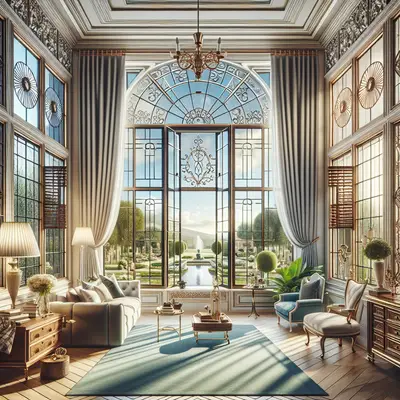
For sophisticated homes, light is not accidental; it is designed. Different window types shape light in distinctly different ways, and combining them thoughtfully can produce rooms that feel composed at every hour.
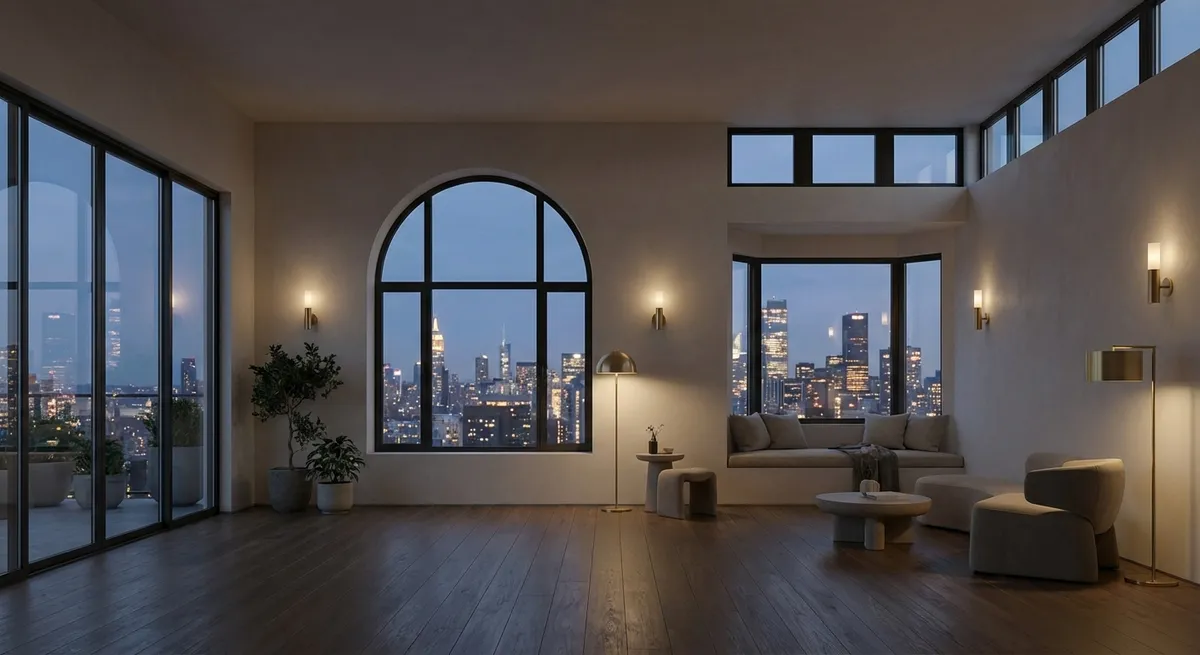
Tall casements or double-hungs draw the eye upward, enhancing the perception of height. Broad sliders or horizontal awnings emphasize breadth and connection to landscape. Clerestory windows—narrow, high fixed or awning units near the ceiling line—introduce a wash of diffuse light without sacrificing privacy or valuable wall space.
In living rooms, a common premium strategy is a central fixed picture window flanked by narrower operable casements. This configuration delivers three simultaneous benefits: a cinematic view, controlled ventilation from the sides, and a visually balanced composition that reads as deliberate, not generic. In stairwells and corridors, small, strategically placed fixed or awning windows can create moments of light that feel almost like architectural jewelry.
Bedrooms may benefit from a mix: lower sill heights for connection to the garden using casements or double-hungs, paired with slim, high fixed panels or transoms for gentle morning or twilight light. Bathrooms can use frosted or textured casements or awnings to admit generous light while protecting privacy, assisted by a small fixed window higher on the wall to provide an additional, glare-softening glow.
Exclusive Insight #3: Think in layers—combine fixed, operable, and clerestory windows in one elevation to sculpt light quality, not just light quantity.
Performance with Finesse: Pairing Glazing Technologies to Window Types
Premium homes demand more than attractive frames; they demand a precise balance of thermal, acoustic, and visual performance aligned with how each window is used.
Operable window types like casements and awnings typically achieve better air sealing than sliders, making them ideal candidates for high-performance glazing in climate-exposed elevations. When paired with double or triple glazing and high-quality weatherstripping, they become pivotal elements in a whole-home energy strategy.
Fixed windows, by virtue of having no moving parts, often allow slimmer frames and improved thermal performance. This makes them prime locations for expansive, higher-performing glass units—low-emissivity (low-E) coatings, warm-edge spacers, and gas fills such as argon or krypton. In sun-exposed locations, a fixed window with carefully selected low-E glass can dramatically cut heat gain and UV exposure without sacrificing clarity.
Certain window types also marry well with specialized upgrades. For example, tilt-and-turn windows (common in European-inspired designs) can accept triple glazing and robust multi-point locking systems, enhancing both efficiency and security. Similarly, large sliding or multi-panel doors may be specified with advanced glazing tuned to resist fading of fine textiles and furnishings, an essential detail in spaces with premium interiors.
Exclusive Insight #4: Assign your highest-spec glass to the window types that work the hardest—fixed units for expansive performance, casements and awnings for airtight ventilation, and specialty systems for high-value zones.
Craftsmanship in the Details: Hardware, Sightlines, and Custom Configurations
At the upper end of the market, what distinguishes a merely “new” window from an exceptional one is rarely obvious at first glance. It lies in the precision of the sightlines, the quiet authority of the hardware, and the way custom configurations resolve into a unified design.
Slender profiles on fixed and operable windows can dramatically change the perceived sophistication of a façade. Thicker, bulkier frames often signal budget solutions, while carefully engineered narrow frames—especially in aluminum-clad wood or high-end fiberglass—create an almost gallery-like edge to the view. The choice of muntin style (true divided lites, simulated, or none at all) can either honor traditional craftsmanship or celebrate contemporary minimalism.
Hardware merits equal attention. Discreet, solid metal levers and nested cranks in finishes like brushed nickel, oil-rubbed bronze, or matte black can elevate the entire room. Tilt-turn systems with concealed hinges, or casements with friction stays that allow the sash to hold position precisely, communicate a level of refinement that homeowners feel every time the window is used.
Custom configurations—arched fixed windows over rectangular casements, corner glass units, asymmetrical compositions—allow homeowners to translate personal taste into permanent architecture. When executed with discipline, this customization never feels busy; it feels bespoke.
Exclusive Insight #5: Once you choose the window type, invest in the “micro-luxuries”—slim sightlines, refined hardware, and carefully composed groupings—that quietly signal craftsmanship every time the window is touched or seen.
Conclusion
Window types are far more than a technical specification; they are instruments through which your home manages light, air, privacy, and aesthetic presence. By reading your home’s architectural language, aligning operation style with daily rituals, layering light intentionally, pairing advanced glazing with the right window types, and elevating craftsmanship in the details, you move from standard replacement to considered transformation.
For homeowners who view their property as a long-term, lived-in investment—not just a series of projects—the right mix of window types becomes a curated collection of “framed experiences.” Each one shapes how the home feels, performs, and presents itself, quietly elevating every room into a more intentional, more distinguished space.
Sources
- [U.S. Department of Energy – Energy-Efficient Windows](https://www.energy.gov/energysaver/design/windows-doors-and-skylights/energy-efficient-windows) – Overview of window types and performance features, including guidance on glazing and frames
- [Efficient Window Coverings & Attachments (U.S. DOE Lawrence Berkeley National Laboratory)](https://www.energy.gov/energysaver/window-attachments) – Technical insight into how window choices and attachments affect comfort and efficiency
- [Canada National Research Council – High-Performance Residential Windows](https://nrc.canada.ca/en/research-development/research-collaboration/programs/high-performance-residential-windows) – Research-based information on advanced window technologies and configurations
- [University of Minnesota Extension – Choosing Energy Efficient Windows](https://extension.umn.edu/windows-and-doors/choosing-energy-efficient-windows) – Practical guidance on matching window type, operation, and performance to climate and use
- [Marvin Windows and Doors – Window Types Guide](https://www.marvin.com/inspiration/window-types) – Manufacturer overview of window operation styles and design applications for different architectural contexts
Key Takeaway
The most important thing to remember from this article is that this information can change how you think about Window Types.