Windows are no longer mere perforations in a wall; in a refined home they behave more like curated thresholds—balancing light, privacy, acoustics, and architectural character in a single gesture. Selecting the right window type is less about flipping through a catalog and more about orchestrating how your home feels and performs throughout the day and across the seasons.
For homeowners considering an elevated window upgrade, the distinctions between casement, awning, double-hung, fixed, and specialty formats are not cosmetic details—they are the grammar of your home’s envelope. Below, we explore key window types and share five exclusive, often-overlooked insights that reward a more discerning eye.
Reading the Architecture: Matching Window Types to the Home’s Language
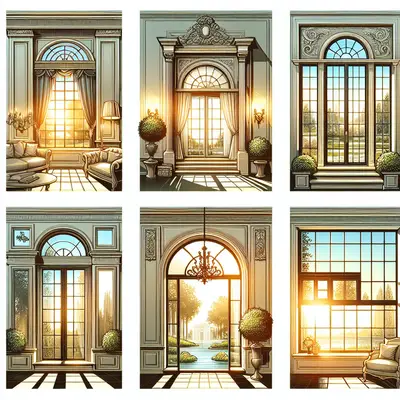
Every home speaks a stylistic language, and window types either reinforce or disrupt that narrative. Traditional homes—Colonial, Tudor, or Craftsman—often carry an inherent vertical rhythm that pairs naturally with double-hung or narrow casement windows divided by muntins. Modern and transitional homes, by contrast, tend to favor expansive fixed panes, slim-framed casements, and lift-and-slide doors that erase the boundary between interior and landscape.
Thoughtful upgrades begin by asking what your façade is already trying to say. Are you emphasizing symmetry and order, or drama and openness? A row of identical double-hungs can make a historic façade feel composed and respectful, while installing a single broad picture window in a living space can intentionally break that rhythm to frame a view like an oversized landscape painting.
The windows you choose will also script how the home ages visually. A tastefully minimal casement with a neutral exterior finish can glide gracefully across architectural trends, whereas an overly stylized grille pattern might feel dated as design sensibilities evolve. The most successful upgrades pair window types and proportions with the home’s bones, yet are quiet enough to remain timeless.
The Quiet Mechanics: How Each Window Type Behaves in Real Life
Beneath their visual presence, different window types behave in distinctive ways that directly affect daily comfort. Casement windows, hinged at the side and cranked outward, create an excellent seal when closed and catch breezes efficiently when opened—ideal for energy-conscious homes seeking controlled, directional ventilation. Their continuous compression seals often surpass the air-tightness of traditional double-hung units.
Double-hung windows, with two sashes that slide vertically, offer nuanced control of airflow: lowering the top sash while raising the bottom allows warm air to escape while cooler air enters below. This dynamic can be particularly effective in older homes where cross-ventilation is part of the original design logic. Modern double-hungs, when well-manufactured and properly installed, can rival casements in performance, though they depend more on precise tolerances and quality hardware.
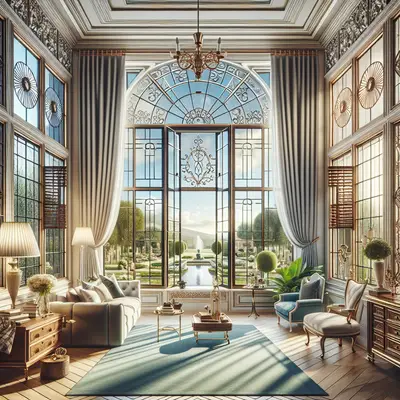
Fixed windows, which do not open, often provide the purest expression of glass—uninterrupted views, slim framing, and excellent thermal performance due to fewer moving joints. They are invaluable for framing vistas, sculpting daylight, or anchoring a feature wall. However, they must be composed thoughtfully alongside operable units to prevent stagnant air pockets and compromised ventilation strategies.
Awning windows, hinged at the top, can remain open during light rain, granting both fresh air and weather protection—a subtle luxury in climates with frequent showers. Sliding windows, while often associated with more modest construction, can be elevated with narrow frames and high-quality tracks, offering a practical solution where swing clearance is limited. Specialty shapes (arches, circles, trapezoids) introduce architectural punctuation but should be deployed sparingly, like jewelry, to avoid visual noise.
Five Exclusive Insights for the Refined Window Upgrade
1. Ventilation as a Designed Experience, Not an Afterthought
Most homeowners focus on views and U-values, but true comfort emerges when ventilation is curated room by room. Instead of merely “adding operable windows,” consider the choreography of air. Casements positioned to catch prevailing breezes can reduce dependence on mechanical cooling, while a combination of awning and fixed units can gently wash a room with fresh air without drafts.
In upper-level spaces, operable transoms above fixed or double-hung units allow warm air to stratify and escape discreetly, preserving comfort without wide-open windows. In bathrooms and spa-like ensuites, pairing an awning window high on the wall with a fixed pane can maintain privacy while preventing moisture buildup. Treating ventilation as an intentional design layer yields quieter, cleaner, and more temperate interiors.
2. The Subtle Art of Sightlines and Frame Proportions
Two windows with identical dimensions can feel profoundly different if their frames and muntin patterns are handled with care. Premium casement or fixed windows with narrow profiles can make a modest opening read as far more expansive, especially when the mullions between adjoining units are minimized.
For homes with significant architectural detail—stonework, millwork, or intricate trim—choosing window types that respect existing sightlines is critical. Aligning muntins with interior features like stair railings or cabinetry edges creates an almost subliminal sense of order. Similarly, ensuring that transoms, sidelights, and main sashes share coherent proportions avoids the “catalog mashup” look that can diminish even the finest materials.
3. Acoustic Performance Tied to Window Type and Operation
While glazing composition plays a major role in sound control, the type of window and how it closes can markedly influence acoustic calm. Casements and awnings, which compress firmly against their frames, often outperform sliding and older double-hung units in noise reduction when paired with appropriate glass.
In homes near urban centers, flight paths, or busy roads, consider a window strategy that reserves fixed and casement units for noise-exposed façades, and leverages double-hungs or sliders where sound pressure is lower. For critical rooms—bedrooms, home offices, nurseries—fixed panes combined with a separate, smaller operable unit can deliver a rare combination of serenity and functionality.
4. Layered Functionality: Pairing Types in a Single Opening
Truly elevated window design often comes from layered compositions rather than a single, monolithic unit. A tall fixed window with an operable awning at the base can feel like a framed artwork that also breathes. A broad picture window flanked by narrow casements gives you the serenity of uninterrupted glass with the ability to tune airflow to your preference.
Above doors and larger openings, operable transoms can bring soft overhead light and gentle cross-ventilation even when shades are drawn for privacy at eye level. In kitchens, where counter depth restricts full casement swings, a blend of smaller awnings or sliders above the counter line can achieve ventilation without obstructing the workspace. This layered approach allows each window type to do what it does best within a unified composition.
5. Long-Term Adaptability: Designing for Future Lifestyles
The best window upgrades anticipate not just how you live now, but how your life might evolve. A nursery that will later serve as a home office may benefit from larger, higher-placed fixed windows to reduce screen glare, combined with one or two well-positioned operable casements for precise air control. Aging-in-place considerations may argue for window types that are easier to operate from a seated position—crank-operated casements or low-resistance sliders—rather than heavy sashes.
Think, too, about potential interior reconfigurations. A generously scaled fixed window in a currently secondary room may become a prized focal point if that space is later converted to a primary bedroom or sitting room. Choosing versatile, high-performance window types now—rather than idiosyncratic or overly specialized units—ensures that your investment continues to support new interior narratives over decades.
Material, Finish, and Window Type: An Integrated Decision
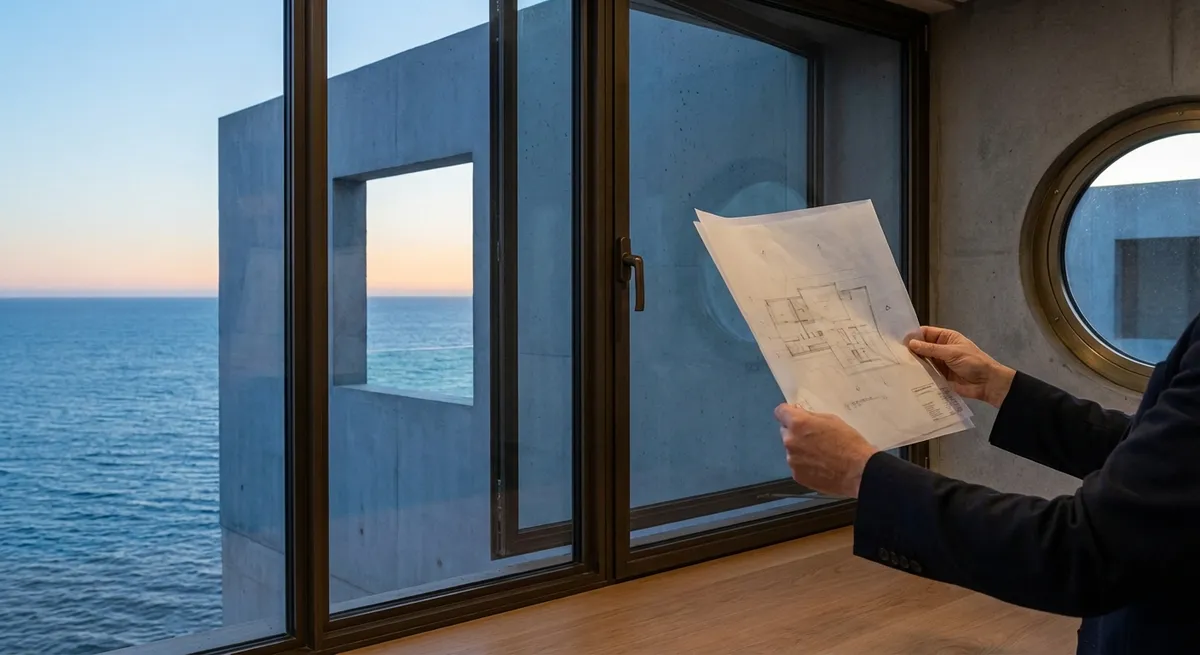
Window type decisions are most powerful when synchronized with frame materials and finishes. Slim aluminum or aluminum-clad casements can accentuate a modernist aesthetic, particularly in large formats, while wood or wood-clad double-hungs bring warmth and tactile richness to traditional façades. Hybrid configurations—such as a wood interior with a durable aluminum exterior—can reconcile a desire for craft inside with resilience outside.
Color choices are equally influential. Dark exterior frames paired with fixed and casement windows can visually “punch out” openings for a gallery-like effect, especially on light façades. Light-toned frames, particularly in double-hung or multi-lite arrangements, can soften the architecture and recall historic precedents. Internally, matching or intentionally contrasting window frames with millwork and flooring can elevate windows from mere apertures to integral design elements.
Regardless of type, prioritize units tested to rigorous performance standards for air infiltration, water resistance, and structural integrity. A beautifully composed bank of casements or a heroic fixed window must also endure wind loads, temperature swings, and daily use with quiet reliability. When aesthetics and engineering are given equal weight, the result is an envelope that looks composed and feels resolutely solid.
Conclusion
Choosing window types for an elevated home is less a technical exercise and more an act of spatial authorship. Casement, awning, double-hung, fixed, and specialty shapes each carry distinct strengths, and the most refined upgrades draw on these deliberately—tailoring ventilation, acoustics, sightlines, and long-term flexibility with subtle precision.
When window types are curated to align with architecture, lifestyle, and performance expectations, the result is a home that feels calm, luminous, and quietly resilient. Your windows cease to be background infrastructure and become, instead, the finely tuned instruments through which your home connects to the world beyond its walls.
Sources
- U.S. Department of Energy – Windows, Doors, and Skylights - Overview of window types, performance considerations, and energy-efficiency guidance
- Efficient Windows Collaborative – Window Selection - Detailed discussion of different window operating types and their performance characteristics
- National Fenestration Rating Council (NFRC) - Explains window performance ratings (U-factor, SHGC, etc.) to support informed product selection
- American Society of Heating, Refrigerating and Air-Conditioning Engineers (ASHRAE) - Provides technical standards that influence fenestration performance in building design
- Marvin – Understanding Window Types - Manufacturer resource illustrating various window types and design applications in real projects
Key Takeaway
The most important thing to remember from this article is that this information can change how you think about Window Types.