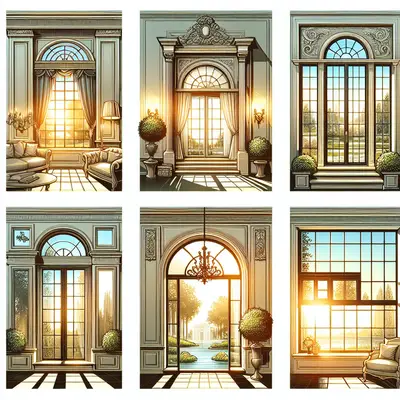
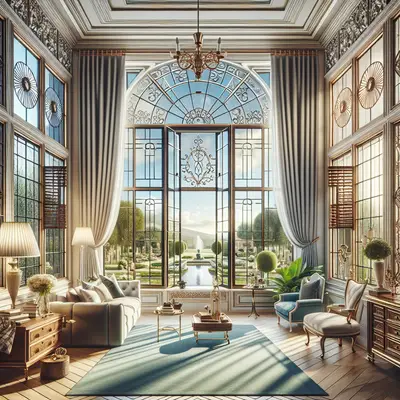
Windows are rarely the first thing a guest comments on—yet they are often what makes a room feel composed, generous, and quietly expensive. For homeowners considering an upgrade, the conversation is no longer about “just replacing glass,” but about selecting window types that choreograph light, manage climate, and elevate architecture with restraint. The right window is less a product and more a decision about how you want your home to feel, season after season.
This guide explores refined window types through a design-conscious lens, and highlights five exclusive insights that discerning homeowners consistently appreciate when they move beyond the standard catalog page.
Composing the Façade: How Window Types Shape Architectural Character
Every window type carries an architectural accent—some whisper, some declare. Double-hung windows, for example, are deeply associated with traditional American architecture, offering balanced sightlines and an easy symmetry that flatters colonials, farmhouses, and brownstones alike. Casement windows, with their single, uninterrupted pane and side-hinged operation, feel more tailored and European, often chosen for contemporary or transitional homes seeking cleaner vertical lines.
Picture windows, immovable and expansive, serve as visual punctuation. They are less about ventilation and more about framing—perfect for spaces where the view itself functions as artwork. Meanwhile, awning windows, hinged at the top, lend a subtle modernity, particularly when used in disciplined horizontal bands or paired above larger fixed units for controlled ventilation.
The key is not to treat window types as isolated selections, but as a coherent vocabulary. Mixing them thoughtfully—casements in living spaces for wide-open breezes, awnings in baths for privacy, and carefully proportioned double-hungs in bedrooms—creates a façade and interior rhythm that feels intentional rather than improvised.
Exclusive Insight #1: Window type should echo your home’s architectural language, not compete with it. Start from your exterior style and interior lines, then refine from there, instead of choosing purely from a price list or showroom sample.
Light as a Design Material: Tailoring Window Types to Orientation
The most sophisticated window decisions begin not with style, but with the sun. Each orientation calls for a different approach, and matching window types to these conditions yields spaces that feel both luxurious and effortless.
On south-facing elevations, large picture or fixed windows paired with operable units can welcome winter light while high-performance glazing prevents overheating. Casement windows here allow for precise control of ventilation, directing breezes into the home like subtle fans. To the east, where morning light is softer, more generous glazing—such as tall double-hungs or stacked picture and awning combinations—can make kitchens or breakfast rooms luminous without glare.
West-facing façades benefit from more disciplined apertures: smaller casements with selective use of overhangs or exterior shading, perhaps paired with high-performance low-E glass tuned to reduce heat gain. On the north side, architects often favor steadier, diffuse light—ideal for studies, studios, and circulation spaces. Narrow vertical or clerestory windows here retain privacy while feeling distinctly modern.
Exclusive Insight #2: Choosing window types by orientation is more impactful than simply choosing by room name. A north-facing bedroom may welcome a generous picture window, while a west-facing counterpart might be far more livable with artfully scaled casements and selective shading.
The Tactile Experience: Operation, Hardware, and Daily Ritual
The true luxury of a window reveals itself not just in how it looks, but in how it feels to use. Casement windows, for instance, offer a different daily experience than double-hungs: a gentle crank that swings the sash outward, bringing fresh air in on a broad, uninterrupted path. In contrast, double-hungs rely on a smooth, counterbalanced glide—a distinctly traditional motion that, when properly engineered, feels quietly precise.
Awning windows open outward from the top and can often remain slightly open even in light rain, making them especially satisfying in bathrooms, laundry rooms, and tucked-away nooks. Slider windows, though often associated with more utilitarian applications, can feel refined when specified with slim frames and high-quality rollers, especially in long, low horizontal proportions.
Hardware is where the tactile experience becomes couture. Solid, well-weighted handles in finishes that echo your interior metals—brushed nickel, satin brass, or matte black—transform every window into a subtle, recurring touchpoint of quality.
Exclusive Insight #3: Think of window operation as a daily ritual, not a mechanical afterthought. The most rewarding window types are those whose movement and hardware feel deliberate, sturdy, and aligned with the level of refinement elsewhere in the home.
Layered Performance: Matching Window Types to Climate and Use
Different window types excel in different performance arenas. Casement windows, which press tighter against their frames when the wind blows, often provide better air sealing than traditional double-hungs. This can be particularly valuable in coastal, windy, or colder climates. Awning windows share a similar advantage and are excellent for controlled, secure ventilation when placed high on a wall.
Fixed or picture windows offer the strongest thermal performance potential simply because they do not open; fewer moving parts mean fewer opportunities for air leakage. These are ideal where view and insulation are priorities, and ventilation can be handled by operable windows nearby. Meanwhile, tilt-and-turn windows—a European-style hybrid that can swing inward like a casement or tilt inward from the top—offer exceptional versatility in both airflow and cleaning access, though they require careful planning for interior clearances and furnishings.
Beyond the frame, the glass unit matters as much as the window type. Double- or triple-pane insulated glazing, low-E coatings, warm-edge spacers, and gas fills (argon or krypton) elevate comfort noticeably—especially near large expanses like picture windows or floor-to-ceiling assemblies.
Exclusive Insight #4: Specify different window types for different performance zones in the home, rather than applying one default style everywhere. Use high-performing fixed windows in view-centric spaces and strategically deploy casements, awnings, or tilt-and-turns where airtightness and controlled ventilation matter most.
Quiet Refinement: Proportion, Mullions, and Visual Weight
What makes one elevation feel refined and another feel busy often comes down to proportion and visual weight. Window types interact differently with muntins (grilles), mullions (the structural dividers between units), and framing—choices that can either flatter your architecture or unintentionally fragment it.
Double-hung windows can carry traditional muntin patterns gracefully—think six-over-one or four-over-one—without appearing fussy when the proportions are generous and the bars are slim. Casement and awning windows, with their broader single panes, are often best with either minimal, widely spaced muntins or none at all, especially in contemporary designs where uninterrupted glass feels more intentional.
Picture windows should be treated as calm fields of glass with carefully considered mullion placement where multiple units are grouped. The most elegant compositions use alignment: transoms lining up across a façade, head heights matching room to room, sill heights consistent around corners. This quiet discipline makes even larger or more varied window types feel harmonious.
Exclusive Insight #5: Treat window layouts like tailored clothing—the fit and proportion matter more than the label. A modestly sized, perfectly aligned casement array can feel more elevated than an oversized but poorly proportioned picture window.
Conclusion
Upgrading windows is not merely a technical project; it is an opportunity to refine how your home meets light, air, and view. When you choose window types with attention to architecture, orientation, operation, performance, and proportion, each opening becomes part of a curated experience rather than a standard fixture.
The most satisfying results come from pairing high-quality manufacturing with thoughtful selection: picture windows where the view deserves a frame, casements where breezes are welcome, awnings where privacy and rain protection matter, and fixed units where insulation and serenity are priorities. For homeowners willing to look beyond the basic catalog page, the right mix of window types can quietly transform a residence from comfortable to truly considered.
Sources
- U.S. Department of Energy – Energy-Efficient Windows - Overview of window types, glazing options, and energy performance considerations
- Efficient Windows Collaborative – Window Selection Guidance - In-depth discussion of climate, orientation, and window configurations for optimal performance
- National Fenestration Rating Council (NFRC) - Explains how to interpret window performance labels (U-factor, SHGC, visible transmittance)
- American Architectural Manufacturers Association (FGIA) - Technical resources on window design, performance, and standards from an industry authority
- U.S. Environmental Protection Agency – ENERGY STAR Windows - Criteria and climate-based recommendations for high-performance residential windows
Key Takeaway
The most important thing to remember from this article is that this information can change how you think about Window Types.