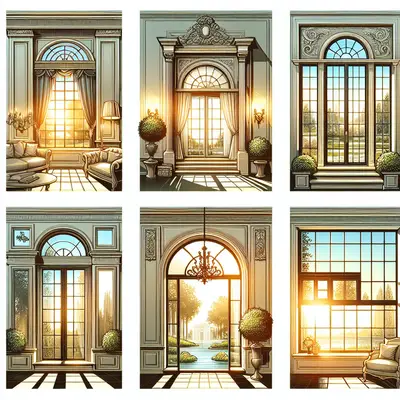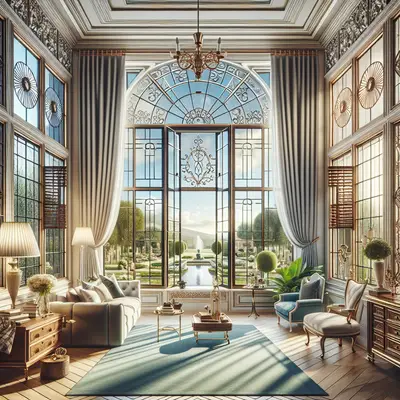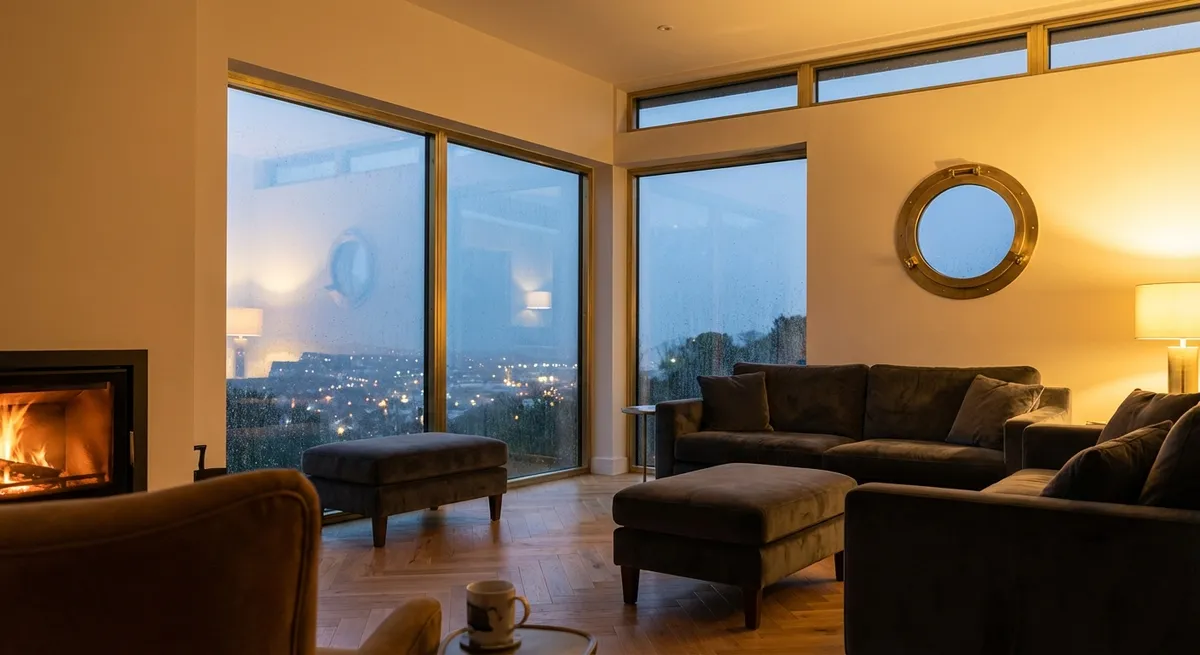
In a finely considered residence, windows are not mere penetrations in a wall—they are instruments of light, proportion, and atmosphere. The right window types can recalibrate how a room feels at dawn, how it performs on the coldest night, and how the architecture presents itself from the street. For homeowners pursuing an elevated upgrade rather than a routine replacement, understanding the nuances between window types is essential. This is not about filling holes with glass; it is about composing a visual and thermal experience that feels intentional, enduring, and quietly luxurious.
Beyond the Label: Understanding Window Types as Design Instruments
Most guides reduce window types to a checklist—casement, double-hung, slider, fixed, and so forth. A genuinely refined approach begins with the role each type plays in the home’s overall composition.
Casement windows, hinged at the side, behave like precision mechanisms: they seal tightly against weatherstripping, offer controlled ventilation, and frame views with minimal interruptions. Double-hung windows, with their vertically sliding sashes, introduce a historical rhythm and allow both upper and lower ventilation, often suiting traditional or transitional façades. Fixed windows serve as pure viewports—no moving parts, maximum clarity—ideal for framing a singular landscape moment or anchoring a feature wall.
The key is not merely choosing “a type,” but calibrating how each category supports the architecture: tall casements in a slender modern elevation, refined double-hungs to preserve a historic façade, slim fixed panels as luminous backdrops for a staircase. Think of window types as a palette of tools rather than interchangeable rectangles.
Performance as Quiet Luxury: How Types Influence Comfort and Efficiency
Sophisticated comfort is rarely loud; it is felt in the absence of drafts, glare, and temperature swings. Different window types inherently perform differently, even before you consider glazing and frame materials.
Casement and awning windows, which press tighter against their frames when the wind blows, often achieve superior air-sealing compared with many sliding or older double-hung designs. Fixed windows, with no operable components, typically offer the highest potential for thermal performance because there are fewer points of failure. Tilt-and-turn windows, more common in European construction, offer a dual function: a secure tilt for gentle ventilation and a full inward swing for maximum airflow, all within a typically robust, well-gasketed frame.
When you view performance as a form of quiet luxury—consistent indoor temperatures, reduced street noise, minimized condensation—the choice of type becomes an investment in daily experience, not a mere technical detail.
Insight 1: Treat Fixed Windows as Architectural Anchors, Not Afterthoughts
Many homeowners consider fixed windows only in terms of cost savings or as secondary to “real,” operable windows. In a curated scheme, the fixed window becomes an anchor element—a disciplined frame for views, light, and geometry.
A generously scaled fixed panel can transform a circulation space, such as the end of a corridor or the landing of a stair, into a moment of pause and contemplation. In living areas, combining an expansive fixed unit with slimmer operable flanking windows preserves both view and ventilation without visually cluttering the sightline. Because fixed windows can be engineered with slimmer frames and fewer hardware constraints, they lend themselves to the razor-thin profiles that define contemporary luxury façades.
For homeowners planning upgrades, deliberately assigning certain wall segments to be “pure view” zones allows you to invest in larger, higher-spec fixed units without overspending on operable hardware where it is not functionally needed.
Insight 2: Use Mixed Typologies to Sculpt Airflow, Not Just Aesthetics
Most window projects begin with an aesthetic brief; the more refined ones begin with a comfort brief as well. Different window types manage airflow in distinct ways, and combining them thoughtfully can transform how a home breathes.
Awning windows, hinged at the top, can be placed higher on a wall or above eye level to allow ventilation even during light rain, making them ideal over showers, kitchen counters, or in covered outdoor transitions. Casements can be oriented to “catch” prevailing breezes and direct them deeper into interior spaces. Double-hungs, when both sashes are operable, permit warm air to escape at the top while cooler air enters at the bottom, supporting natural convection.
By mixing these types—say, casements on windward façades, higher awnings for sheltered ventilation, and carefully positioned fixed panels—homeowners can reduce reliance on mechanical cooling during shoulder seasons and create interior environments that feel fresh rather than mechanically conditioned.
Insight 3: Align Window Types with Lifestyle, Not Just Architecture
A window upgrade often focuses on matching a home’s architectural style, but the truly successful projects begin with how the residents live. The same elevation could support several different window type strategies, each tailored to daily habits.
In a kitchen where windows sit above countertops, casements might become awkward to operate if they swing into decorative lighting or conflict with faucet placement. In that context, a well-proportioned awning or a slim vertical slider may be more practical while still elegant. In children’s rooms or spaces where furniture might block lower sashes, tilt-and-turn or higher-placed awning windows offer safe, controllable ventilation without requiring constant rearrangement.
In formal rooms, tall, narrow casements can pair beautifully with drapery, allowing for precise window treatments and framing. In media rooms, smaller operable units paired with larger fixed panes can admit daylight while preserving wall space for art and technology. By beginning with questions about use—who opens which window, at what time of day, and for what reason—you can select window types that quietly cooperate with your routines.
Insight 4: Consider Cleaning, Maintenance, and Aging as Part of the Design
Sophisticated homeowners increasingly assess not just how windows look when installed, but how they will behave 5, 10, or 20 years later. Different window types age differently, both in terms of mechanical wear and practical upkeep.
Casement and awning windows rely on cranks and hinges, which should be of high quality if you want them to operate smoothly over time. Sliders and double-hungs accumulate dust and debris in tracks and balances, which may be more frequent cleaning points, especially in urban environments. Tilt-and-turn windows can simplify interior cleaning of larger panes because the sash swings inward, making exterior glass accessible from inside—an elegant solution for upper stories.
When selecting window types, consider which façades are most difficult to access, how frequently windows are likely to be opened, and whether occupants are prepared to manage more complex hardware. Investing in higher-grade mechanisms for the window types that will be used most often contributes significantly to long-term satisfaction.
Insight 5: Use Window Type Variation to Subtly Zone Your Home
In a thoughtfully orchestrated residence, window types can signal the character of different spaces without resorting to obvious decoration. A strategic shift from one primary window type to another can quietly delineate zones of public versus private, active versus contemplative.
Public-facing rooms—living areas, dining spaces, entry halls—might benefit from taller, more formal window types, such as elongated casements or double-hungs that echo classic proportions. Private retreats—bedrooms, reading nooks, spa-like baths—could incorporate lower, wider awning or tilt-and-turn units, prioritizing controlled privacy and nuanced ventilation. Along transitional spaces such as stairwells and corridors, fixed and slim operable windows can create a rhythm of light without demanding attention.
By aligning different window types with spatial intent, you transform windows from neutral infrastructure into quiet markers of how each part of the home should feel.
Materials, Frames, and Type: Combining Form and Function
The choice of window type cannot be entirely separated from frame materials, especially when the target is a premium outcome. Certain materials naturally suit certain typologies.
Aluminum and fiberglass, for example, excel in slender-profile casements and large fixed units where structural strength and minimal sightlines are priorities. Wood interiors with aluminum-clad exteriors can deliver a warm, tactile frame for traditional double-hungs while maintaining durability outdoors. uPVC frames often pair with tilt-and-turn and casement systems in high-performance assemblies, offering robust gaskets and multi-point locks.
The most refined projects treat the combination of type and material as a coordinated system. The result is a home where a steel-framed fixed window in a stairwell feels appropriate next to elegantly proportioned wood-clad casements in a library, yet everything reads as part of a unified architectural language.
Conclusion
Selecting window types for an elevated home is less about ticking boxes and more about orchestrating light, air, and proportion with precision. Fixed windows become anchors rather than leftovers, airflow is sculpted rather than accidental, and lifestyle guides type selection as much as architecture. Maintenance and long-term aging are acknowledged upfront, not discovered years later. Above all, variation in window types is not a visual gimmick but a subtle code for how spaces are meant to be used and experienced.
For homeowners pursuing a window upgrade at a higher standard, the question is no longer “Which window is cheapest or most common?” but rather “Which combination of window types best expresses how we want to live in this home, season after season?” Answering that with intention is where true refinement begins.
Sources
- [U.S. Department of Energy – Window Types](https://www.energy.gov/energysaver/types-windows) - Overview of common window types and their energy implications
- [Efficient Windows Collaborative – Window Selection](https://www.efficientwindows.org/selection.php) - Guidance on choosing window configurations for performance and comfort
- [National Institute of Building Sciences – Windows and Glazing](https://www.wbdg.org/design-disciplines/windows-and-glazing) - Technical discussion of window systems within building design
- [American Architectural Manufacturers Association (FGIA) – Window Performance](https://fgiaonline.org/pages/windows) - Information on window performance, operation types, and standards
- [Lawrence Berkeley National Laboratory – Windows & Daylighting](https://windows.lbl.gov/) - Research-driven resources on window performance, comfort, and design
Key Takeaway
The most important thing to remember from this article is that this information can change how you think about Window Types.