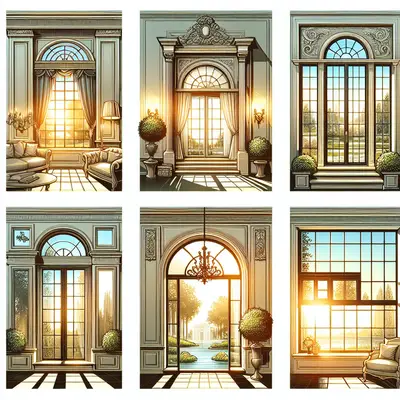
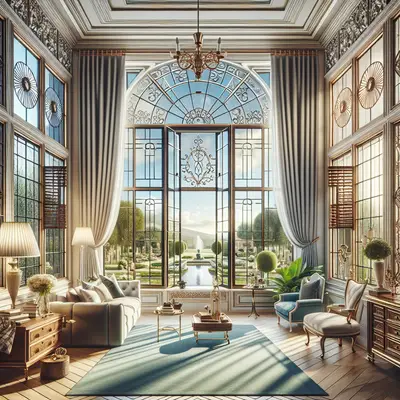
Windows are not mere apertures in a wall; they are curated openings that choreograph light, frame landscape, and orchestrate the daily experience of a home. For homeowners pursuing a more considered standard of living, the conversation moves beyond “double-hung or casement” into a more nuanced dialogue about proportion, performance, and presence.
This guide explores how to think about window types not as commodity products, but as architectural instruments—each with its own temperament, capabilities, and implications for refined living.
Reading a Room Through Its Windows
Before comparing window types, it is worth pausing to consider what your rooms are actually asking for.
A formal living room may call for expansive, uninterrupted glazing that behaves almost like a wall of light. A library might benefit from lower sill heights to bring seated views of the garden while preserving upper wall space for shelving. A primary suite may require operable windows that enable precise control of fresh air without disrupting privacy or sightlines.
Each window type—casement, awning, double-hung, slider, tilt-and-turn, fixed picture, clerestory, or custom specialty shapes—interacts differently with three essential qualities: light, air, and view. A sophisticated upgrade is less about adopting the “best” type in isolation and more about assigning the right type to the right role, room by room.
In elevated residential design, the most successful homes often pair two or three primary window types and deploy them consistently, using subtle variation in size and configuration to respond to each space. This creates a visual language that feels deliberate rather than opportunistic.
How Window Types Shape Light, Not Just Admit It
Natural light is not a binary of “bright” or “dim.” It has direction, character, and rhythm. The chosen window type determines how that light is staged.
Fixed picture windows, for example, excel at drama: broad panes, minimal interruption, and a strong connection to distant views. Yet they can also create sharp contrasts and glare if not thoughtfully scaled or shaded. Casement and awning windows allow more nuanced composition—narrower vertical or horizontal apertures that modulate the intensity of light and direct it deeper into the room.
Clerestory windows positioned high on the wall invite daylight without sacrificing privacy or wall space. Combining clerestory fixed glazing with lower operable windows can create a layered light effect: soft, ambient brightness from above, and more directional light and ventilation at eye level.
Sophisticated window schemes often prioritize consistency of light over sheer quantity. Rather than maximizing glass area in every wall, they pay attention to when and how the sun moves, especially on east- and west-facing elevations where low-angled light can be as disruptive as it is beautiful.
Ventilation as a Designed Experience
Most discussions of window types reduce ventilation to a checkbox: “operable or fixed.” In a refined home, airflow is far more intentional.
Casement and awning windows, which hinge and project outward, can “scoop” breezes into the interior and are particularly effective when oriented toward prevailing winds. Tilt-and-turn designs offer two modes: a secure tilt position that allows gentle top-venting, and a full inward swing for more robust ventilation. This duality is especially valuable in bedrooms and upper floors where safety, ease of cleaning, and precise air control matter.
Sliders and single-hung units, while familiar and often more economical, typically provide less effective airflow per opening compared with a comparable casement or awning. When performance and comfort are priorities, many homeowners are choosing fewer, better-placed operable units rather than more but less effective ones.
Thoughtful ventilation strategy also considers stack effect—the tendency of warm air to rise. Pairing higher-level operable windows (such as awnings above fixed units or operable clerestories) with lower-level openings can create quiet, passive air circulation that reduces reliance on mechanical cooling during shoulder seasons.
Five Exclusive Insights for the Discerning Homeowner
For homeowners approaching window upgrades with elevated standards, several subtler considerations often distinguish a merely competent solution from an exceptional one:
1. Sightlines Matter More Than Glass Area
Two windows with the same rough opening can feel entirely different depending on frame profiles and mullion design. Slimmer sightlines and carefully aligned mullions can make even modestly sized windows feel more expansive and tailored.
When comparing window types and manufacturers, look beyond visible glass area and U-factor. Study frame thickness, the alignment of horizontal and vertical divisions across adjacent openings, and how operable sashes intersect with fixed elements. These details contribute more to perceived luxury than an incremental increase in glass percentage.
2. Different Rooms Deserve Different Opening Mechanisms
A single window type throughout the home may be efficient to specify, but it rarely offers the best experiential outcome.
- Kitchens benefit from awning or casement windows placed above counters for ease of operation and effective ventilation.
- Secondary bedrooms may be better served by tilt-and-turn units for secure night-time air, especially on upper levels.
- Stairwells and tall spaces can use motorized awning or hopper windows high on the wall to release heat buildup quietly and unobtrusively.
Curating window types by function rather than defaulting to a one-size-fits-all approach can dramatically improve daily comfort.
3. Glare Control Is an Architectural Decision, Not Just a Shade Purchase
The type, placement, and proportion of windows can pre-empt many glare issues before any fabric is specified.
Horizontal, ribbon-like awning or fixed windows placed higher on the wall can deliver soft, even light without harsh contrast. Deep jambs, exterior overhangs, and recessed window placements can temper direct sun while preserving transparency. Combining tall, narrow operable units with selective fixed glazing may control brightness more gracefully than a single, large expanse of glass.
In premium projects, architects often use a mix of window types and wall projections to “edit” sunlight, allowing homes to feel luminous without being visually fatiguing.
4. Acoustics Should Influence Window Type Selection
Sound management is often associated with glass thickness and lamination, but window type also plays a decisive role.
Fixed units, when well detailed, typically offer superior sound attenuation compared with operable windows. Strategically using fixed windows along noisier façades, complemented by carefully placed high-performance operable units, can deliver quiet interiors without sacrificing fresh air where it truly matters.
Casement and tilt-and-turn windows generally seal more tightly than sliders due to compression gaskets, making them better candidates when acoustic privacy is a priority—such as in urban homes, homes near busy roads, or close to active outdoor amenities.
5. Cleaning and Maintenance Are Design Variables, Not Afterthoughts
For multi-story homes or expansive glazed elevations, the difference between a window that is theoretically operable and one that is practically maintainable becomes significant over time.
Inward-opening tilt-and-turn windows and certain European-style casements simplify exterior glass cleaning from the interior on upper levels. Fixed clerestory windows with high-performance coatings can reduce visible dirt accumulation but may still require periodic access via catwalks or specialized equipment.
When planning large picture windows, consider pairing them with nearby operable units for pressure-equalization and condensation management. The most elegant solutions account not only for how windows look on installation day, but how they will be cared for over the decades to come.
Harmonizing Window Types with Architectural Intent
The most compelling homes use window types to reinforce an architectural narrative.
In a restrained, modern composition, large fixed panes, minimal casement units, and discreet operable slots can express calm rigor. In a more classic or transitional home, double-hung or simulated double-hung casements with well-proportioned divided lites can honor tradition while integrating contemporary performance.
Consistency is crucial: repeat sill heights, align head heights across adjacent spaces, and use the same family of profiles and finishes for all types. Where variation is required—for example, switching from casements on the ground floor to tilt-and-turn on upper levels—the shift should feel purposeful rather than accidental.
Ultimately, choosing window types at a premium level is not about unnecessary complexity. It is about making fewer, more deliberate decisions: privileging alignment over abundance, performance over habit, and experiential quality over generic expectations.
Conclusion
A window upgrade, approached with discernment, is less a transaction and more an architectural recalibration. Selecting the right mix of window types can refine how your home receives light, invites air, frames views, protects from noise, and supports the quiet rituals of daily life.
For the homeowner who expects more than standard solutions, the path forward begins with better questions: How do I want each room to feel at 7 a.m.? At dusk? During a storm? As those answers become clearer, the ideal window types often reveal themselves—not as catalog items, but as tailored instruments of comfort and character.
Sources
- U.S. Department of Energy – Windows, Doors and Skylights - Overview of window types, energy performance, and selection considerations
- Efficient Windows Collaborative (University of Minnesota) - Detailed descriptions of common window types and their functional differences
- Lawrence Berkeley National Laboratory – Windows and Daylighting - Research-based information on window performance, daylighting, and comfort
- American Architectural Manufacturers Association (FGIA) - Industry guidance on window design, operation types, and performance standards
- This Old House – Choosing Replacement Windows - Practical homeowner-focused insight into selecting window styles and configurations
Key Takeaway
The most important thing to remember from this article is that this information can change how you think about Window Types.