Windows are no longer mere apertures in a wall; they are architectural statements that shape light, dictate mood, and quietly signal the level of discernment behind a home. For homeowners considering an upgrade, the question is no longer simply “Which windows?” but rather “Which configuration of glass, frame, and function best supports the life I want this space to hold?”
This is where an intelligent understanding of window types becomes invaluable—not as a catalog of shapes, but as a vocabulary of design, comfort, and performance. Below, we explore how thoughtful selection transforms windows into enduring assets, with five exclusive insights tailored for the homeowner who expects more than the standard specification.
Reading the Room: Matching Window Types to Spatial Intent
Before comparing casement to double-hung or fixed to tilt-and-turn, it is worth beginning with intent: what is the room supposed to feel like, and how will it actually be used?
Tall, narrow casements invite a vertical rhythm, emphasizing height and elegance, while broad sliders and expansive picture windows emphasize horizontality and calm, ideal for spaces intended for lingering views and quiet contemplation. In a kitchen, a well-placed awning window above a counter can invite breeze without exposing the interior to rain; in a primary suite, carefully proportioned corner windows can dissolve visual boundaries and borrow landscape as décor.
The most successful window upgrades treat each room as a distinct narrative. A study may benefit from higher sill heights to reduce glare on screens while preserving daylight; a dining room can feel more intimate with divided-lite configurations that subtly filter the outside world. The key is to select window types not in isolation, but in relation to ceiling heights, furniture placement, and circulation paths.
Beyond the Obvious: Understanding the Character of Each Window Type
Each primary window type brings a different character to a space—beyond the basic notions of “opens this way” or “has that profile.”
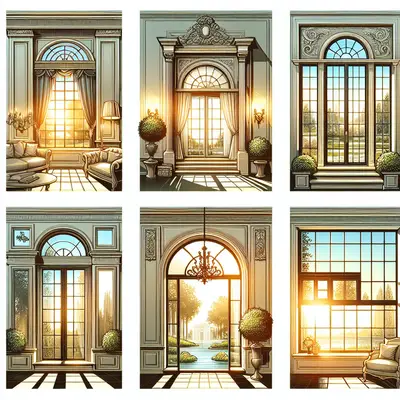
Casement windows, hinged at the side, offer uninterrupted glass and exceptional ventilation, catching breezes like a sail when opened outward. They excel in contemporary and transitional homes seeking both clarity of view and performance. Double-hung windows, meanwhile, bring a classic verticality and are especially adept where nuanced airflow is desirable; opening the top sash draws warm air out, while the bottom sash invites cool air in.
Picture windows operate as pure composition: large, fixed expanses that turn the outside into an ever-changing artwork. Tilt-and-turn units—more common in European construction—provide both secure ventilation (tilt) and full access (turn), making them ideal for elevated floors and refined urban environments.
Awning windows introduce a subtle sophistication, often working in series above or below larger fixed units to create multi-layered façades. When carefully orchestrated, combining types within a single elevation can yield a façade that feels not busy, but beautifully composed.
Exclusive Insight #1: Frame Profiles as Silent Luxury
For discerning homeowners, the difference between acceptable and exceptional often lives in the thin line of the frame.
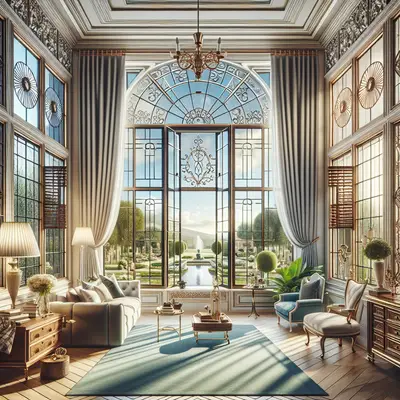
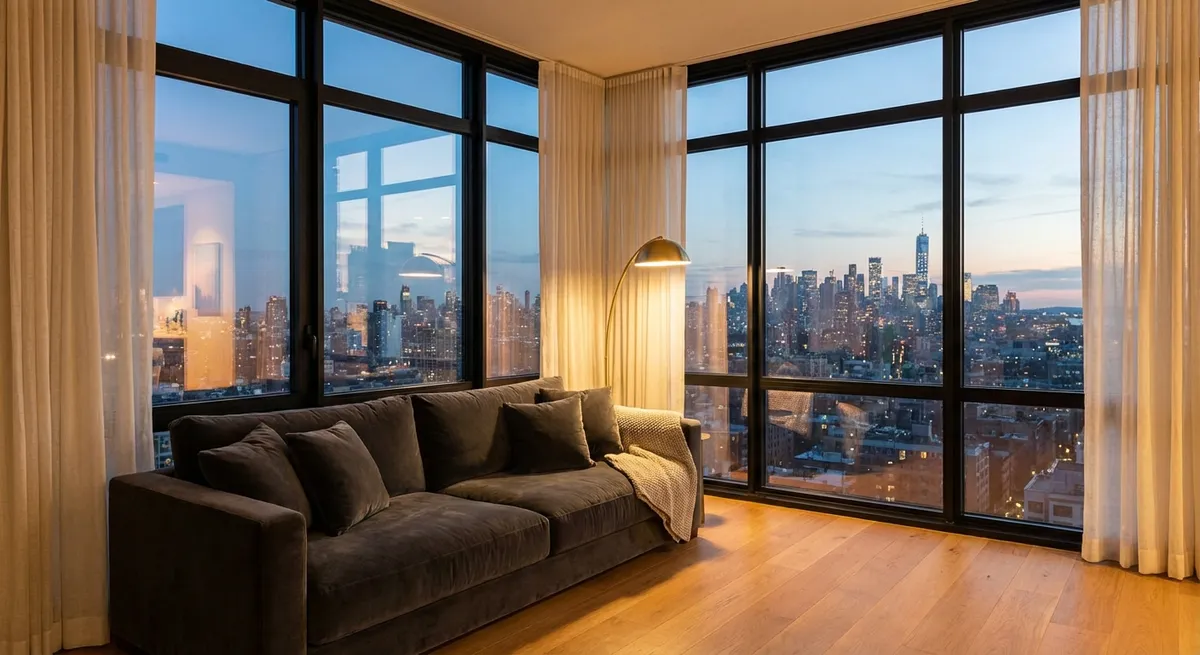
Slender frame profiles—especially in high-performance aluminum, fiberglass, or engineered composites—reduce visual weight and maximize glass area. This is more than a stylistic preference; narrow sightlines create a perception of openness and allow a given opening to read larger than its dimensions. In rooms with strong architectural bones, slim-framed fixed and casement windows can make wall planes appear lighter and more refined.
Thicker frames, when thoughtfully detailed, can signal solidity and tradition, particularly in wood or clad-wood systems. The luxury lies less in the material label and more in the precision of the joinery, the crispness of the corners, and the alignment of mullions across multiple openings. A meticulously aligned muntin pattern across a bank of double-hung windows, for instance, says more about quality than any marketing term ever could.
In short, when comparing window types, evaluate not just how they operate, but how the frame proportions support the architecture. This is the quiet language of elevated design.
Exclusive Insight #2: Operational Logic as Everyday Comfort
Sophisticated window selection considers how each window will be used, not just how it looks in a drawing.
In a living room with deep seating, a slider or tilt-and-turn may be impractical if reaching hardware becomes inconvenient. In narrow side yards, outward-opening casements may conflict with landscaping or walkways, making sliders or inward-tilt units more appropriate. Bathrooms benefit from higher awning windows that preserve privacy while still allowing steam to escape efficiently.
Operational logic also influences cleaning and maintenance. Tilt-and-turn and certain double-hung designs make interior cleaning of exterior panes simple, especially on upper floors, which is both a safety and convenience consideration. In homes with large expanses of fixed glass, adding operable flanking units can maintain visual calm while ensuring air exchange without occupying precious wall area with additional openings.
When assessing window types, walk through the space—physically or in plan—and imagine the gesture required to open each window. An elegant home is one where those small, everyday gestures feel effortless.
Exclusive Insight #3: Layered Glazing Strategies by Orientation
All window types perform differently depending on orientation, and refined upgrades tailor glazing and style to the path of the sun, not a one-size-fits-all package.
South- and west-facing windows benefit from glass and shading strategies that manage solar gain—especially in larger fixed or picture units. Here, low-emissivity (low‑E) coatings optimized for solar control can temper afternoon heat while maintaining clarity. On the north side, more generous glazing—whether as picture windows, tall casements, or a combination—can invite soft, diffuse light without the penalty of excessive heat.
East-facing bedrooms may favor operable windows (casement, tilt-and-turn, or double-hung) to harness cool morning air, while west-facing living areas might use a higher proportion of fixed glass combined with carefully placed awnings or casements to release heat in the evening. Even skylight or roof window selections should consider shaft design and glazing to avoid unwanted glare.
The insight: choose window type and glass as a pair, by compass direction. A refined envelope treats each façade as a unique climate condition, not just another wall with openings.
Exclusive Insight #4: Acoustic Personality as a Design Choice
Noise control is often discussed in terms of glass thickness and air gaps, but window type plays a sophisticated supporting role in acoustic performance.
Fixed windows, by nature, generally offer the strongest acoustic baseline because they do not have operable seals. When paired with laminated glass and properly engineered frames, they can create remarkably quiet interior environments—even in urban or near-airport settings. Casements and tilt-and-turn units, which lock and compress seals around the entire frame, typically outperform sliders and some double-hung designs in sound reduction due to superior gasket engagement.
For rooms where calm is paramount—primary suites, nurseries, studies—consider a hierarchy of window types: a greater percentage of fixed and compression-sealing operable units, supported by targeted use of laminated or acoustic glass packages. In spaces where the sound of the outside world is part of the charm—such as a patio-adjacent kitchen—sliders or traditional double-hung windows may be entirely appropriate.
Selecting window types with acoustic personality in mind allows you to tune the home’s soundscape room by room, rather than accepting a uniform level of noise everywhere.
Exclusive Insight #5: Composing a Cohesive Yet Nuanced Façade
One of the most overlooked advantages of understanding window types is the ability to create a façade that feels intentionally composed rather than merely “fenestrated.”
A disciplined approach often starts with a primary type—such as casements or double-hungs—as the dominant language, then introduces complementary types (fixed, awning, or specialty shapes) as accent pieces. For instance, a home might rely predominantly on tall casements but introduce wide fixed picture windows at view corridors and slim awning bands in service spaces, all while maintaining consistent head heights, mullion alignments, and finishes.
Specialty windows—arched tops, corner glass, clerestories, or geometric shapes—are best used as punctuation, not as a collection of isolated gestures. The most elegant façades employ restraint: repeated window types with carefully considered variation in groupings, sizes, and light patterns.
By approaching window upgrades as a composition exercise—where each type plays a clear role in the visual hierarchy—you elevate the home from “well-specified” to genuinely bespoke.
Navigating Material and Type Together
Window type decisions become even more nuanced when paired with frame material and finish.
Wood and clad-wood windows pair gracefully with traditional and transitional types like double-hungs and French casements, where profiles, sash details, and interior stains can be finely tuned. Aluminum and fiberglass frames often shine with large format picture and casement windows, capitalizing on their inherent strength to support expansive glass with minimal framing. Hybrid systems and high-end vinyl composites can deliver strong performance at more accessible price points, particularly for sliders and tilt-and-turn units.
The goal is to ensure that material and type speak the same design language. A minimal, flush aluminum tilt-and-turn window, for example, sits naturally in a modern façade of smooth stucco or metal cladding, whereas a richly profiled wood double-hung feels at home amidst stone, brick, or traditional millwork. Cohesion matters; when type and material are aligned, the entire envelope appears more deliberate and calm.
Conclusion
The decision to upgrade windows is, at its best, an invitation to refine the way a home receives light, air, and view. Understanding window types as tools of composition—rather than mere product categories—allows homeowners to choreograph experiences: the way a breeze moves through the kitchen, the way morning light lands on a reading chair, the way a view is framed and made part of daily life.
By considering frame profiles, operational logic, orientation-specific glazing, acoustic personality, and façade composition, your selection of window types becomes an architectural act rather than a transactional one. In that shift lies the difference between a house with new windows and a home with beautifully curated openings.
Sources
- [U.S. Department of Energy – Energy-Efficient Windows](https://www.energy.gov/energysaver/design/windows-doors-and-skylights/energy-efficient-windows) – Overview of window types, glazing options, and performance considerations by orientation
- [Efficient Windows Collaborative (National Fenestration Rating Council)](https://www.efficientwindows.org/types-of-windows/) – Detailed descriptions of common window types and how operation affects energy and comfort
- [American Architectural Manufacturers Association (FGIA) – Window Fundamentals](https://fgiaonline.org/pages/windows) – Technical background on window design, materials, and performance attributes
- [Pella – Understanding Different Types of Windows](https://www.pella.com/ideas/windows/types/) – Practical explanations and visuals of various residential window types and configurations
- [Marvin – Sound Transmission and Acoustic Performance](https://www.marvin.com/blog/how-windows-affect-sound-transmission) – Insight into how different window constructions and glass choices influence interior noise levels
Key Takeaway
The most important thing to remember from this article is that this information can change how you think about Window Types.