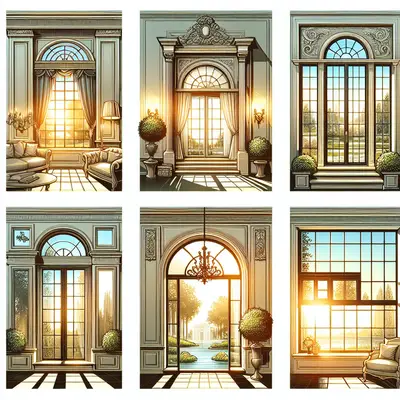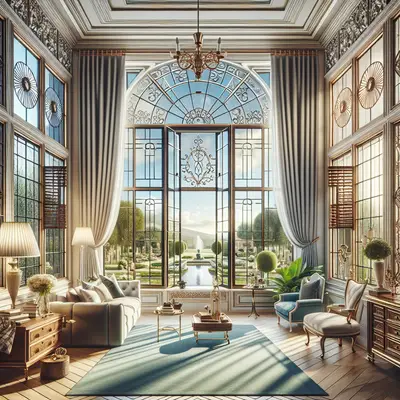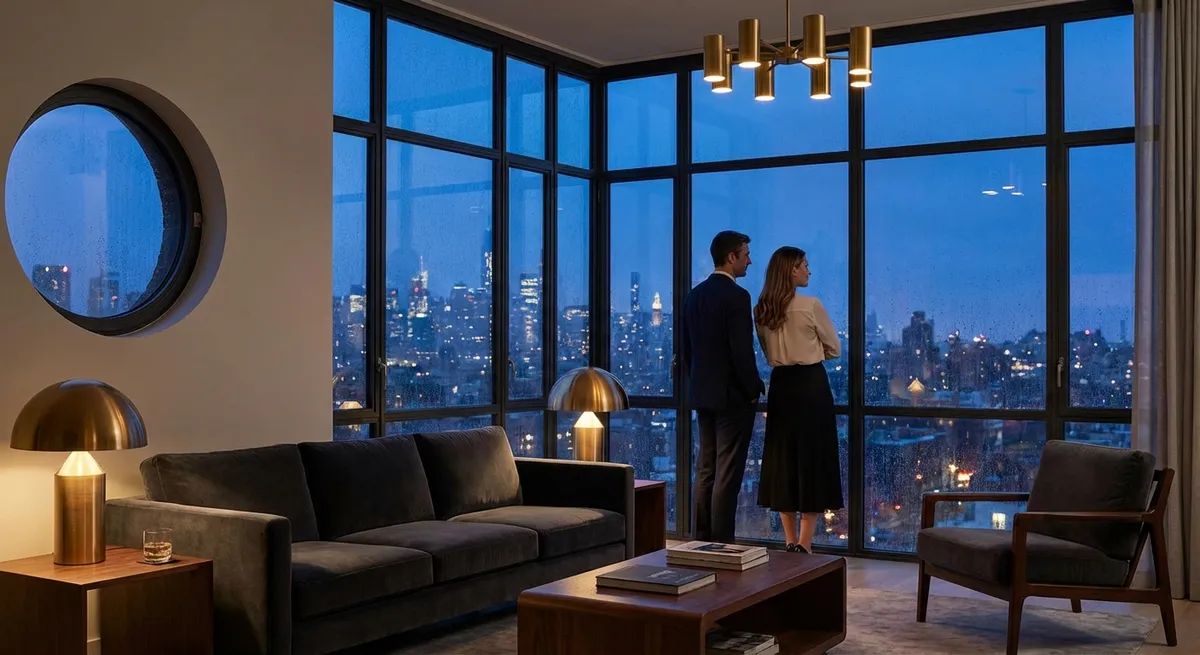
In a refined residence, windows are not merely openings; they are calibrated instruments for light, proportion, and quiet comfort. The right window type can elongate a façade, choreograph privacy, and even alter the perceived architecture of a room. For homeowners contemplating an upgrade, understanding window types is less about memorizing categories and more about learning how each form performs—visually, acoustically, and thermally—within your particular home. What follows is a considered exploration of key window types, paired with five exclusive insights that help you move beyond catalog labels toward a truly curated selection.
Reading the Architecture: Let the Home Dictate the Window Type
Before comparing features, begin with your home’s architectural language. A Tudor revival, a glass-forward contemporary, and a classical townhouse all “speak” differently—and the most successful window upgrades amplify that voice rather than overwrite it.
Casement windows, with their clean lines and generous glass area, sit beautifully within modern and transitional designs, especially when specified with slim profiles and minimal muntins. Double-hung windows, by contrast, can honor historic sightlines in traditional façades while still delivering modern performance when thoughtfully detailed.
Bay and bow windows introduce a sculptural projection that can feel either stately or contemporary depending on trim, mullion pattern, and seat detail. Meanwhile, expansive picture windows and floor‑to‑ceiling sliders dissolve the boundary between indoors and out, but they demand discipline in framing, shading, and furniture placement to avoid feeling exposed or overlit.
The core principle: allow the home’s structure—rooflines, symmetry, rhythms of columns and walls—to guide which window types feel inevitable rather than imposed. Upgrades that look “meant to be” age far more gracefully than those that chase trend.
Exclusive Insight #1: Design in Elevations, Not in Isolation
Instead of choosing windows room by room, review your selections on elevation drawings—or at minimum, printed photos of your façades with options sketched or overlaid. This holistic view often reveals misalignments in mullion patterns, sill heights, or proportions that would otherwise only become obvious once installed.
Casement, Awning, and Tilt‑Turn: Precision Control of Air and Light
Hinged windows—casement, awning, and tilt‑turn—offer a level of precision that discerning homeowners often prefer once they experience it.
Casement windows hinge at the side and open outward, catching passing breezes like a sail. Because the sash compresses into the frame when closed, they can deliver excellent air sealing compared with many sliding or single-hung options. Awning windows hinge at the top and open from the bottom, allowing ventilation even during light rain—making them ideal for bathrooms, over kitchen counters, or paired above larger fixed glass.
The European‑style tilt‑turn window combines both, tilting inward at the top for secure ventilation or swinging fully open like a door for maximum airflow and easy cleaning. This dual function, often with robust multi‑point locking, has a quietly luxurious feel and can be a revelation in bedrooms and upper floors.
Where these window types excel is in controlled, directional ventilation and a visually uncluttered frame. Their operable hardware can also become a subtle design gesture, particularly in premium finishes such as brushed bronze or blackened steel.
Exclusive Insight #2: Align Operation with Microclimates, Not Just Rooms
Don’t simply ask, “What window belongs in the kitchen?” Instead, consider the microclimate around each opening: prevailing wind direction, shading from trees, exposure to rain, or street noise. Place casements where they can “catch” breezes, awnings where protected ventilation is useful, and tilt‑turns where secure night‑time airing is desirable. Operating style becomes a tailored response to your home’s invisible environmental patterns.
Double‑Hung, Single‑Hung, and Sliding: Heritage and Practicality Refined
Double‑hung and single‑hung windows are fixtures of American architecture—and for good reason. Their vertical movement supports classic proportions, and in many historic districts they are effectively the default. In double‑hung windows, both sashes move; in single‑hung, only the bottom sash is operable. This affects not only ventilation patterns but also cleaning and alignment with interior furnishings.
Double‑hung windows can create a natural convection loop by opening the top sash slightly to exhaust warm air while opening the bottom sash to draw in cooler air. In multi‑story homes without mechanical ventilation, this subtle effect can make upper levels feel markedly more comfortable in shoulder seasons.
Sliding windows, meanwhile, move horizontally and pair well with low, wide openings, sometimes echoing mid‑century modern aesthetics. They are space‑efficient in tight exterior conditions—such as along walkways or near terraces—because they do not project outward.
Where these types become elevated is in attention to proportion, meeting rail thickness, and hardware refinement. A carefully chosen grille pattern, a slightly slimmed meeting rail, and a muted, solid‑metal lock can quietly transform these familiar forms from builder‑grade to bespoke.
Exclusive Insight #3: Calibrate Sightlines to Key Seated and Standing Heights
When choosing hung or sliding windows, confirm where the meeting rails and mullions intersect your eye line—both standing and seated. In living rooms and studies, a poorly placed rail can slice directly through your primary view when you are seated, subtly diminishing the room’s sense of calm. Minor adjustments to sill height or rail placement on custom or semi‑custom units can yield outsized visual comfort.
Picture, Bay, and Corner Windows: Architecture as Framing Device
Fixed windows—picture, bay, bow, and corner assemblies—operate as architectural framing devices for your landscape and skyline. They do not open, but they invite a different kind of performance: uninterrupted glass, stronger acoustic isolation, and a heightened interplay between interior design and exterior scene.
Picture windows are most compelling when they are composed as “tableaux”: large panes aligned with a particular view, whether that is a sculptural tree, a city skyline, or an internal courtyard. Bay and bow windows extend this concept into three dimensions, pulling the room outward and creating opportunities for window seats, reading alcoves, or dining niches that feel both grounded and expansive.
Corner windows—where glass meets glass with minimal or no visible post—emphasize horizontality and blur the edges of a room. When combined with deep overhangs, sheer drapery, or integrated shades, they achieve a gallery‑like serenity.
Exclusive Insight #4: Pair Monumental Glass with Intentional “Soft Edges”
Large fixed windows are impressive but can feel austere without softening strategies. Plan, at the specification stage, for elements that temper the expansiveness: integrated motorized shades concealed in ceiling pockets, sheer layered drapery, or built‑in seating with textiles. Considering these “soft edges” early ensures the glass feels luxurious rather than overwhelming, and it influences frame color, jamb depth, and hardware planning.
Specialty and Statement Windows: Arches, Clerestory, and Custom Forms
Specialty windows—arches, ovals, triangulated shapes, clerestory bands, and custom geometries—offer a way to punctuate your design without resorting to overt ornamentation. When used sparingly and strategically, they communicate a level of intention that reads as quietly luxurious.
Arched or elliptical windows can soften otherwise rigorous façades, especially above entry doors or in stairwells. Ovals or round windows introduce a jewel‑like focal point in powder rooms or gables. Clerestory windows—high, narrow bands of glass—are particularly effective in modern interiors, washing ceilings with light while protecting privacy and wall space.
Custom combinations, such as a large fixed pane flanked by slim operable casements or a matrix of varied‑size panes, can create a one‑of‑a‑kind composition. The key is discipline: one or two well‑placed specialty gestures per elevation often feel more considered than multiple competing statements.
Exclusive Insight #5: Use Specialty Windows to Solve, Not Simply Decorate
Instead of adding an arched or custom window as a purely decorative flourish, assign it a problem‑solving role. A clerestory can preserve privacy on an urban infill lot while still delivering daylight. A round window can align with a stair landing, bringing light into what would otherwise be a dark midpoint. When every non‑standard opening has a clear functional rationale, the overall design reads as sophisticated rather than whimsical.
Material and Finish: Matching Window Type to Tactile Expectations
Window type choices are inseparable from material and finish—especially in a premium home where the tactile experience of a handle, the depth of a jamb, and the grain of interior trim all matter.
Wood windows offer unmatched warmth and can be stained or painted to harmonize with cabinetry, flooring, and millwork. Many high‑end units now use aluminum cladding on the exterior for durability while preserving the interior wood. Aluminum and steel frames, with their ability to support slender sightlines and dark finishes, are often favored for modern casement, tilt‑turn, and fixed units, especially in large expanses.
Fiberglass and high‑end vinyl can be surprisingly refined when specified with the right profiles, finishes, and glass packages, though they are often better suited for casement and sliding types than for complex specialty shapes.
Tie each window type to an intentional finish strategy: perhaps warm wood for operable bedroom casements, dark metal for living‑space picture windows, and a calm, color‑matched finish for secondary areas. The goal is a cohesive narrative where materiality reinforces how each window is used and experienced.
Conclusion
Selecting window types for an elevated home is less a technical exercise than a curatorial one. Casements, double‑hungs, sliders, picture windows, bays, and specialty forms each bring distinct capabilities in light, air, scale, and presence. By reading your architecture, tuning operation to microclimates, calibrating sightlines, softening monumental glass, and assigning purposeful roles to statement windows, you move beyond generic upgrades into a realm of tailored apertures.
In a premium residence, windows are among the few elements experienced from every room, in every season, and at every hour. When chosen with this level of care, they cease to be background infrastructure and become one of the most quietly significant expressions of your home’s character—and of your own.
Sources
- U.S. Department of Energy – Windows, Doors, and Skylights - Overview of window types, performance considerations, and energy-related guidance
- Efficient Windows Collaborative – Window Types - Independent resource explaining common window operating styles and their performance implications
- National Park Service – Guidelines for Rehabilitating Historic Windows - Insight into aligning window choices with architectural character, especially in traditional and historic homes
- Pella – Window Styles and Types - Manufacturer reference illustrating different window types, use cases, and design variations
- Marvin – Understanding Windows and Doors - Detailed breakdown of window operation types, configurations, and design considerations for premium applications
Key Takeaway
The most important thing to remember from this article is that this information can change how you think about Window Types.