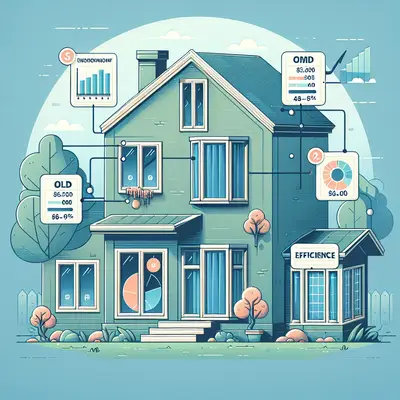
When thoughtfully executed, a window upgrade is less a household expense and more a quiet realignment of your home’s comfort, efficiency, and long-term financial posture. For the discerning homeowner, the question is not simply “What do new windows cost?” but “What, precisely, am I buying in performance, longevity, and livability?” This article explores the nuanced economics behind premium window solutions and offers five exclusive, often-overlooked insights that elevate cost analysis from basic arithmetic to strategic decision-making.
Understanding True Window Value, Not Just Price
The published price of a window typically reflects only a fraction of the story. A careful cost analysis views each window as a performance asset with a measurable lifespan, maintenance profile, and energy impact.
The refined approach starts with cost per year of service, not just cost per unit. A mid-range window that fails after 15 years may ultimately be more expensive than a premium unit that remains structurally sound and visually pristine for 30+ years. Additionally, performance specifications—U-factor, solar heat gain coefficient (SHGC), visible transmittance, and air leakage—carry direct and indirect economic implications, from utility bills to HVAC wear.
For premium properties, aesthetic and architectural integrity add another layer of value. High-caliber frames, precisely matched sightlines, and elevated hardware choices can preserve or even enhance market appeal, particularly in competitive luxury neighborhoods. In this context, “cost” becomes an interplay of engineering, craftsmanship, and resale desirability—not merely an invoice total.
Exclusive Insight #1: Cost per Comfort Hour
Most homeowners think in terms of monthly energy savings, but a more refined metric is “cost per comfort hour.” This frames your investment around how consistently and quietly your interior stays at your desired temperature and light level.
Imagine two window packages with similar energy ratings but different frame technologies and glazing compositions. One may technically reduce your heating and cooling load, but still allow cold drafts near seating areas or radiant heat near large glass walls. The other, with superior thermal breaks, optimized coatings, and tighter seals, delivers steadier interior surface temperatures and minimal drafts—yielding more hours of genuine comfort per year.
When you evaluate proposals, consider:
- How consistently will interior surfaces stay within a comfortable temperature range?
- Will you be able to sit near large glass areas in winter without a chill?
- Will summer sun be controlled enough to avoid “hot spots” in particular rooms?
Translating raw performance data into lived experience often reveals that a higher upfront cost can produce disproportionately more comfort hours, particularly in homes with expansive glazing or exposed orientations.
Exclusive Insight #2: The Silent Cost of Misaligned Specifications
Many window projects fail not because of poor products, but because the specifications do not match the home’s climate, architecture, or occupancy patterns. This misalignment creates hidden costs that only appear over time.
Consider the following missteps:
- Over-tinted glazing in temperate climates: You reduce passive solar heat in winter and natural light year-round, increasing lighting and heating costs and reducing visual quality.
- Underperforming glazing in intense sun zones: Cooling loads surge, shades stay down, and you effectively pay for a view you rarely enjoy.
- One-size-fits-all specs for a multi-exposure façade: South- and west-facing elevations may need a different SHGC profile than shaded or north-facing façades.
A sophisticated cost analysis treats each orientation and room as a micro-environment. The premium solution may specify multiple glazing packages within one project to balance solar gain, glare control, and clarity. While the initial line item may rise slightly due to complexity, operating costs and day-to-day livability improve meaningfully over the life of the windows.
Exclusive Insight #3: Lifecycle Economics of Frame Materials
Most homeowners compare vinyl, fiberglass, aluminum, and wood primarily on initial price and aesthetic appeal. Yet the true financial distinction lies in lifecycle behavior: stability, maintenance burden, and performance durability.
A refined cost analysis includes:
- Dimensional stability and seal integrity: Materials such as fiberglass and high-performance composites tend to expand and contract more predictably than vinyl, preserving air- and water-tightness over decades. This protects against subtle air leakage that can erode your energy savings and comfort.
- Finish longevity and maintenance: High-quality factory finishes on aluminum-clad or fiberglass systems can substantially outlast traditional painted wood, reducing repainting costs and preserving a “new” appearance. Conversely, lower-grade finishes can fade or chalk, making a home appear prematurely aged.
- Structural rigidity with large spans: For expansive glass walls or oversized units, stiffer materials maintain alignment and smooth operation, preventing costly adjustments, hardware replacements, or frame distortions over time.
When calculating cost per year, incorporate realistic maintenance intervals, potential repainting or refinishing, and the likelihood of performance drift. A slightly higher initial investment in a stable, well-engineered frame system often produces a lower cost of ownership and preserves architectural refinement over the long horizon.
Exclusive Insight #4: Installation Quality as a Financial Variable
Installation quality is often treated as a simple labor line item, yet in reality it is a major financial lever. Even the most advanced glazing and premium frames will underperform if they are not integrated correctly into the building envelope.
From a cost-analysis perspective, consider:
- Air and water management strategy: Is the installation approach harmonized with your wall assembly, including drainage planes, flashing, and insulation? A meticulous installation can dramatically reduce the risk of moisture-related damage—one of the most expensive forms of building failure.
- Tolerances and shimming: High-end windows are engineered to fine tolerances. Inadequate shimming or uneven openings can cause binding, uneven gasket compression, or premature seal failure, all of which carry long-term cost implications.
- Verification and testing: Some premium projects include blower-door tests, infrared scans, or water intrusion tests. These modest upfront costs can validate performance and catch small issues before they become major repairs.
When comparing quotes, a “lower-cost” installation that omits sophisticated flashing components, ignores manufacturer guidelines, or rushes alignment may quietly erode the value of your investment. The true premium choice is often a combination of quality product and envelope-competent installation, yielding stable performance and fewer surprises over decades.
Exclusive Insight #5: Strategic Phasing to Protect Cash Flow and Cohesion
For many high-end homes, the optimal window upgrade is not a single event but a carefully choreographed sequence. Thoughtful phasing can balance budget constraints with architectural consistency and performance goals.
Key strategies include:
- Prioritizing performance-critical elevations: South- and west-facing façades, poorly insulated rooms, or areas with known condensation issues may justify early intervention, delivering immediate comfort and energy benefits.
- Aligning with other envelope projects: Pairing window replacement with exterior cladding, roof work, or insulation upgrades can reduce access and labor redundancies—often a more efficient use of funds than isolated interventions.
- Maintaining aesthetic continuity: If full-home replacement is not immediately feasible, deliberate selection of styles, sightlines, and finishes ensures that phased areas will ultimately harmonize visually. This protects curb appeal and avoids a patchwork appearance that can diminish perceived value.
- Leveraging incentives at the right time: Energy-efficiency tax credits and utility rebates sometimes favor high-performance tiers or specific time windows. Integrating these into your phasing strategy can soften the financial impact while encouraging superior specifications.
By viewing your project as a strategic, multi-stage investment rather than a single transaction, you retain financial flexibility without compromising on long-term performance or design integrity.
Conclusion
A sophisticated cost analysis of window upgrades extends far beyond line-item prices. It considers the nuanced interplay of comfort, performance durability, material behavior, installation craftsmanship, and strategic timing. For the discerning homeowner, the objective is not to minimize today’s invoice, but to maximize the quiet, enduring value that premium windows bring: refined comfort, architectural poise, and a home that feels effortlessly composed in every season.
Approached with this depth of insight, your window project becomes not just an upgrade, but a carefully curated enhancement of how your home lives, performs, and ages—day after day, year after year.
Sources
- [U.S. Department of Energy – Energy-Efficient Window Attachments](https://www.energy.gov/energysaver/window-coverings) – Overview of how windows and related components influence energy use and comfort
- [Efficient Windows Collaborative – Window Selection Guidance](https://www.efficientwindows.org/selection.php) – Detailed explanations of U-factor, SHGC, and climate-specific performance considerations
- [ENERGY STAR – Residential Windows, Doors and Skylights](https://www.energystar.gov/products/residential_windows_doors_and_skylights) – Criteria and guidance on high-performance window products and potential energy savings
- [Building Science Corporation – Window Installation Details](https://www.buildingscience.com/documents/digests/bsd-installed-performance-of-windows) – Technical insight into the impact of installation quality on window performance
- [National Association of Realtors – 2023 Remodeling Impact Report](https://www.nar.realtor/research-and-statistics/research-reports/remodeling-impact) – Data on remodeling projects, including energy-related upgrades and their effect on home value and owner satisfaction
Key Takeaway
The most important thing to remember from this article is that this information can change how you think about Cost Analysis.