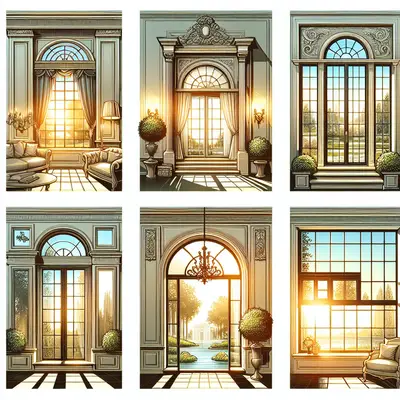
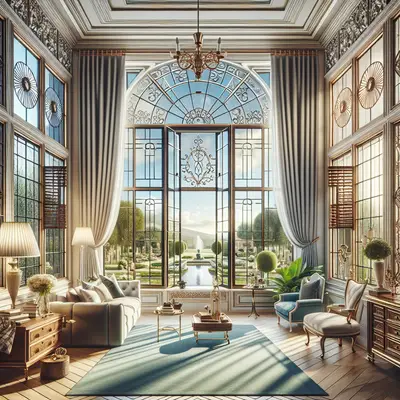
The most memorable homes rarely shout for attention; they simply feel impeccably resolved. Often, that quiet sense of completeness begins at the glass line—where framing, proportion, and light collaborate. Window choice is no longer a binary decision between “double-hung or casement.” For the discerning homeowner, window types have become an exercise in curating views, orchestrating ventilation, and refining the very character of a façade. This is where subtle decisions—how a sash pivots, how a corner dissolves, how a frame recedes—begin to define a home that feels genuinely elevated.
Reading the Architecture: Matching Window Types to a Home’s Language
Every architectural style has its own visual grammar, and window types are one of its clearest sentences. Selecting windows without reading that grammar can leave even a well-designed home feeling vaguely off-key.
Traditional homes—Georgian, Colonial, Tudor, or Shingle—typically favor vertically oriented windows with divided lites, often double-hung or elegantly detailed casements. The proportions matter: tall, narrow windows elongate façades, while overly squat units can visually compress them. True divided-lite or convincingly simulated muntins preserve historical cadence without sacrificing contemporary performance.
Modern and contemporary homes, by contrast, are fluent in expanses of glazing, larger units, and minimal framing. Here, fixed picture windows, narrow-framed casements, and lift-and-slide units support that language, with mullions minimized or eliminated entirely. In transitional homes, pairing operable casements with large fixed panels can bridge traditional symmetry and modern openness.
The refined approach is not to impose a trendy window type, but to let the existing architecture dictate a vocabulary—then upgrade materials, performance, and detailing within that language.
Operable vs. Fixed: Curating How a Room Breathes, Not Just How It Looks
Choosing between operable and fixed windows is not merely about cost; it is about how each space will feel at different moments of the day and season. Fixed windows often deliver the most pristine aesthetics: slimmer frames, broader glass, cleaner lines. They are exceptional for framing signature views or creating gallery-like calm in living areas, stairwells, and double-height spaces.
Yet an exquisitely detailed fixed window that cannot be opened in a kitchen, ensuite, or corner study can feel conceptually incomplete. Operable windows—casements, awnings, tilt-turns, or well-executed double-hungs—are the valves through which a home exhales. Casements excel at catching breezes; awnings can remain modestly open during a light rain; tilt-turns offer both secure ventilation and full, generous openings.
A considered window scheme often layers both types: fixed elements to celebrate views and geometry, strategically placed operable units to fine-tune air movement and comfort. The luxury is not in choosing one or the other, but in orchestrating both with intention.
Five Exclusive Insights for the Detail-Oriented Homeowner
In a marketplace awash with specifications and sales language, a few subtler truths tend to be overlooked. These five insights can quietly transform an upgrade from competent to truly exceptional.
1. The Sightline Hierarchy Matters More Than Frame Thickness
Many buyers ask, “How thin are the frames?” A better question: “What do my sightlines align with?” The true elegance lies in creating a hierarchy—key mullions that line up with interior elements such as fireplace surrounds, stair landings, or cabinet reveals.
When window heads align consistently across a façade—or when a central mullion echoes the vertical of a key architectural feature—the effect is subliminal but powerful. Even with moderately sized frames, a home feels more composed. Consider engaging your designer or installer to map these alignments on elevations; it’s a level of rigor typically reserved for custom homes, yet it need not be exclusive to them.
2. Ventilation Strategy Can Be Designed, Not Left to Chance
Most window upgrades default to “some of each” for operable types, but refined homes treat ventilation as a planned system. By varying window types across orientations—casements on the windward side to catch breezes, awnings or tilt-turns on the leeward side to release warm air—you can create cross-ventilation that feels almost engineered.
Upper-level operables in stairwells or double-height spaces allow warm air to escape naturally, reducing dependency on mechanical cooling. Even the height of the operable portion can be strategic: lower openings to temper radiant heat near seating areas, higher ones to vent humidity in kitchens and bathrooms. The choice of window type becomes a subtle act of climate choreography.
3. Frame Material Is an Interior Finish, Not Just an Exterior Decision
Many homeowners select frame material—wood, aluminum-clad, fiberglass, composite—for durability or energy performance, then treat interior finishes as an afterthought. In reality, the interior face of your windows is a permanent, built-in furnishing that will live beside your cabinetry, flooring, and millwork for decades.
Warm, stained wood interiors can soften minimalist rooms and lend a gallery-like warmth to spaces with cool stone or concrete. Painted wood or fiberglass frames can recede quietly when color-matched to wall trim, putting all visual emphasis on the view. Sleek aluminum interiors can coordinate with contemporary metal details and minimalist handrails.
When you evaluate window types, consider requesting samples specifically for interior review and assess them under your actual lighting conditions, against your flooring and wall colors. This small, deliberate step can dramatically elevate the perceived quality of your spaces.
4. Specialty Windows Can Solve Design Problems Conventional Units Cannot
Standard rectangular windows can feel limiting when architectural conditions are complex: awkward corners, rooflines, or asymmetrical additions. Specialty window types—corner windows, clerestory bands, radius or segmental units, trapezoids—can turn constraints into signatures.
Corner windows, for instance, visually dissolve structure at the edges of rooms, expanding a modest footprint into a panoramic experience. High clerestory bands introduce daylight and privacy simultaneously, ideal for urban lots or bathroom suites. A carefully placed shaped window—arched, elliptical, or triangular—can reconcile roof pitches or introduce a subtle rhythm to a gable end.
Rather than forcing standard units into resistant conditions, consider whether a specialty window type might resolve the geometry and elevate the outcome from “well renovated” to “distinctively tailored.”
5. The Most Luxurious Window Type May Be the One You Don’t See
In premium projects, some of the most sophisticated window decisions are intentionally invisible. Concealed frames, pocketing systems, and flush thresholds shift the focus from the window itself to the continuity between inside and out.
Large-scale lift-and-slide or multi-panel doors that pocket into the wall blur the boundary between a living area and terrace, effectively extending usable square footage in good weather. Floor-to-ceiling fixed panels with frames buried in floors, ceilings, and walls create the sensation of pure glass planes rather than “windows.” Even modest openings can benefit from recessed tracks and minimal handles that do not visually interrupt the experience.
This philosophy—of making the frame disappear so that light, view, and spatial flow take center stage—is often what separates a polished renovation from a truly elevated one.
Rethinking Familiar Window Types Through a Refined Lens
It is tempting to categorize windows in simple terms: double-hung as “traditional,” casement as “European,” sliders as “basic,” picture windows as “luxury.” In practice, any of these types can read either pedestrian or exquisite, depending on the execution.
Double-hung windows with carefully considered rail proportions, authentic muntin profiles, and weighty, well-balanced sashes can feel bespoke, especially in historic or heritage contexts. Casements with narrow stiles and precise hardware can read as quiet, minimal objects, rather than utilitarian mechanisms. Even sliding units, when designed with expansive glass, slender interlocks, and flush tracks, can deliver a resort-like experience that bears little resemblance to builder-grade sliders.
The refinement lies in combining type, proportion, hardware, and surround detail. Matching or deliberately contrasting interior trim, choosing hinge and handle finishes that echo your broader hardware palette, and coordinating window heads with door heights all contribute to a sense that the windows belong not just to the walls, but to the entire design story.
Conclusion
Selecting window types is no longer a peripheral decision delegated to a catalog. For the design-conscious homeowner, it is an act of authorship—deciding how light enters, how air moves, how views are framed, and how the architecture expresses itself over time. When you look beyond basic categories and begin to think in terms of sightlines, ventilation choreography, integrated finishes, specialty solutions, and even “invisible” frames, familiar window types reveal unexpected potential.
The result is not simply better windows, but a home that feels more deliberate, more composed, and quietly more luxurious—every time you glance toward the glass.
Sources
- U.S. Department of Energy – Guide to Energy-Efficient Windows - Overview of window types, glazing, and frame considerations with a performance focus
- Efficient Windows Collaborative – Window Selection Guidance - Detailed discussion of window operation types, materials, and design impacts
- American Institute of Architects – Residential Design Trends - Insights into contemporary residential design priorities, including indoor-outdoor connection and glazing trends
- Harvard Graduate School of Design – Light and Architecture Resources - General resource hub for research and discourse on light, space, and architectural detailing
- Marvin Windows & Doors – Window Types and Options - Manufacturer documentation illustrating practical variations in window types, materials, and configurations
Key Takeaway
The most important thing to remember from this article is that this information can change how you think about Window Types.