If you’ve seen the latest “Nature Photographer of the Year” winners circulating online, you’ve probably paused mid-scroll. Those images—mist suspended over a Nordic lake, a falcon frozen mid‑flight, moonlight spilling across a glacier—do something extraordinary: they choreograph light, texture, and perspective so perfectly that you feel you’re standing inside the scene.
That same visual magic is precisely what most homes miss—and what the right window types can quietly deliver every single day.
As social media fills with breathtaking landscape photography, many design‑savvy homeowners are rethinking how their windows frame the world outside. Not just for energy savings (though those matter), but for a richer, more curated relationship with natural light and views. Below, we translate lessons from today’s top nature images into five exclusive, practical insights to guide your next window upgrade.
1. From “Snapshot” to Panorama: Rethinking Picture Windows as Living Art
Look at the winning wide‑angle nature shots being shared right now: they’re essentially picture windows to the world—borderless, immersive, and meticulously composed. A well‑chosen picture window can play the same role in your home, but with more intention than the standard builder-grade rectangle.
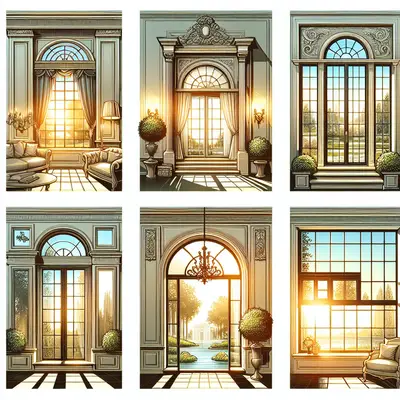
Rather than defaulting to a generic fixed unit, consider the proportions and placement the way a photographer frames a scene. A low‑sill, wide picture window in a living room can transform a garden into living artwork, especially when paired with sleek black or bronze frames that visually “disappear,” similar to an ultra‑thin photo bezel. In contemporary architecture, large fixed windows with minimal mullions mimic the cinematic sweep of those award‑winning landscape shots, particularly when oriented to capture long, lateral views—tree lines, skylines, or coastline if you’re lucky. The key is to select picture windows not as an afterthought, but as deliberately as you might choose a gallery‑worthy print: what do you want to wake up to, work beside, and host guests around every day?
2. Light at Different Hours: Matching Window Types to the “Golden Hour” in Each Room
Nature photographers obsess over timing—golden hour, blue hour, diffused fog. The best homes do the same, but via carefully chosen window types tuned to orientation and lifestyle.
On east‑facing elevations where morning light is crisp and low, tall double‑hung or casement windows create a refined, almost Parisian vertical rhythm, drawing daylight deep into the space while allowing nuanced ventilation during breakfast or early work hours. South‑facing façades, by contrast, benefit from a more controlled approach: larger fixed units paired with operable awning windows beneath or above. This lets you enjoy abundant, high‑angle daylight for most of the day while subtly venting excess heat without drafts. West‑facing rooms—often punished by harsh late‑day sun—may be better served by narrower operable windows (casements or tilt‑turns) flanked by architectural shading or deep overhangs, creating a softer, editorial-quality “evening light” without resorting to blackout shutters. Thinking about your home in terms of its daily “lighting schedule” naturally leads to a more sophisticated mix of window types, not a one‑size‑fits‑all solution.
3. Framing Depth and Layers: How Specialty Shapes Elevate Even Modest Views
Scroll through the Nature Photographer of the Year series and you’ll notice a recurring trick: layered depth. Foreground grass, middle-distance water, distant peaks. The same idea applies beautifully to window selection, especially in homes without a dramatic ocean or mountain view.
Specialty shapes—arched windows, full‑height corner glazing, clerestory bands—add layered interest to even ordinary surroundings. A modest city garden feels suddenly more intentional when framed by a slender, vertical corner window that visually extends the greenery past the edge of the room. A circular or segmental arch window above a standard unit introduces a quiet, almost European sophistication, raising the room’s perceived height and echoing the soft arcs seen in many nature compositions. Clerestory windows, placed high on a wall, can pull in sky, tree canopies, or cloud movement while preserving privacy at street level, much like a photographer cropping a frame to exclude distractions. The result is a home that feels curated, not just constructed—each window type selected to reveal depth and texture in the everyday.
4. The Quiet Luxury of Tilt‑Turn and Lift‑Slide Systems
Just as professional photographers have moved from basic smartphone shots to advanced mirrorless bodies and precision lenses, high‑end homeowners are gravitating from conventional sliders to more refined European‑style window and door systems.
Tilt‑turn windows, increasingly featured in design‑forward projects across the US, offer two distinct functions in one minimalist frame: tilt inward from the top for secure, gentle ventilation or swing fully inward like a casement for maximum opening and effortless cleaning. It’s a quietly luxurious solution—elegant hardware, exceptional sealing, and a feeling of precision every time you operate it. Similarly, large lift‑slide doors, with their ultra‑smooth gliding tracks and slim profiles, echo the sweeping horizontals of panoramic photography. When closed, they behave like massive picture windows with outstanding energy performance; when opened, they dissolve the boundary between interior and exterior in a way traditional sliders rarely match. For homeowners seeking a premium, tactile experience—where every interaction with the window feels intentional—these systems represent a meaningful upgrade in both function and design sophistication.
5. Glass as a Performance Lens: Choosing Glazing Like a Photographer Chooses Filters
Nature photographers rely on specialist lenses and filters—polarizers, neutral density, UV—to control glare, contrast, and color. High‑performance glass options serve an analogous role in modern window design, and the most discerning homeowners are treating glazing as a deliberate choice, not a technical footnote.
Low‑E coatings, laminated interlayers, and selective tints can be combined to fine‑tune how each window type behaves in its exact context. A floor‑to‑ceiling picture window facing south or west might use a more solar‑selective low‑E glass to manage heat gain without giving the room an overly tinted, “sunglasses” feel. Bedrooms along a busy street can benefit from acoustic laminated glass that softens noise in the same way a photo filter softens harsh contrast—suddenly, the room feels calm, hushed, and insulated from the outside world. In rooms where color rendering is critical (art studios, dressing rooms), specifying glass with high visible light transmission and excellent color neutrality preserves true tones, much like a high‑end photographic lens maintains color fidelity. Treating glass as a curated material—rather than a standard commodity—elevates every window type you select.
Conclusion
The global fascination with award‑winning nature photography this season is more than a social‑media moment; it’s a reminder that the way we frame the world profoundly shapes how we experience it. Your windows are the home’s permanent lenses—defining not just what you see, but how you feel in every room, at every hour.
By choosing window types with the same care a photographer applies to composition, equipment, and light, you move beyond basic replacements into true architectural refinement: picture windows that function as art, operable units tuned to the day’s light, specialty shapes that add depth, advanced operating systems that feel exquisitely engineered, and glazing specified with the precision of a professional filter.
In a world where we spend so much time looking at curated images on screens, the most luxurious upgrade might be this simple: transforming the views in your own home into scenes worthy of a gallery—every time you look out.
Key Takeaway
The most important thing to remember from this article is that this information can change how you think about Window Types.