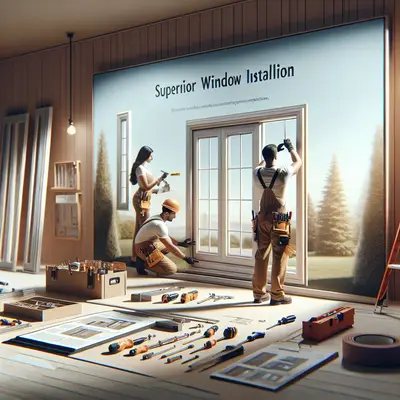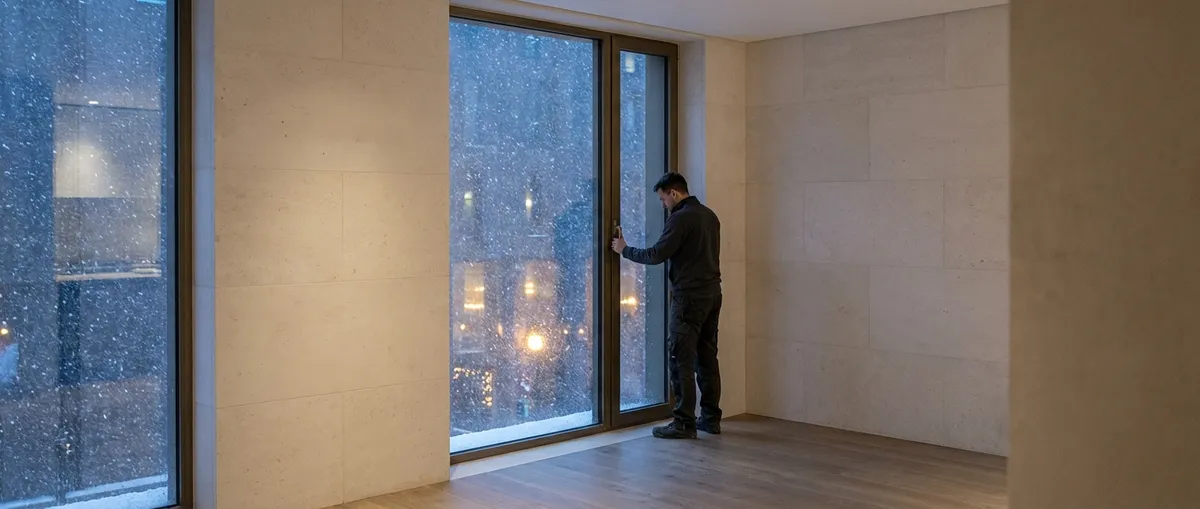
A window installation is often treated as a logistical step—remove, replace, caulk, and move on. In a refined home, however, this moment is far more consequential. Done well, window installation becomes a form of architectural editing: tightening sightlines, orchestrating light, refining acoustics, and elevating comfort in ways that feel effortless yet unmistakably luxurious. When you begin to see installation as a craft rather than a commodity, every detail—from the alignment of mullions to the feel of the sash lock—becomes part of a curated experience.
This perspective is where discerning homeowners gain an advantage. A premium window unit can only perform at its highest level if its installation is equally precise, considered, and context-aware. The difference is not always visible in photographs, but you feel it every time you walk into the room.
Installation as Performance, Not Just Placement
Most discussions around windows revolve around frame materials and glass packages; the assumption is that performance is built into the product. In reality, the installation often determines whether that performance is realized or compromised. A high-end, triple-glazed unit can be rendered mediocre by a poorly prepared opening or imprecise shimming, while a well-installed mid-range window can quietly outperform expectations.
Viewing installation as performance means thinking beyond “does it fit?” to “how does it live?” This includes how the unit handles seasonal movement of the structure, how the interior casing meets existing finishes, how the exterior flashing integrates with your cladding system, and how the assembly manages water, air, and vapor over decades—not merely through the next storm. The result of this mindset is felt in fewer drafts, crisper lines, quieter interiors, and a sense that the windows belong to the architecture rather than sit on top of it.
In sophisticated homes where architectural language is already strong, the installer’s role becomes interpreter as much as technician. They translate the architect’s intent, the manufacturer’s specifications, and the reality of an existing structure into a single, balanced solution. That, more than any specification sheet, is where true performance begins.
Five Exclusive Installation Insights for the Discerning Homeowner
For homeowners accustomed to a higher standard of finish, the nuances of window installation offer rare opportunities to elevate both daily comfort and long-term value. These five insights—often overlooked in conventional projects—can guide a more refined approach to your upgrade.
1. Treat the Rough Opening as an Engineered Assembly
In many projects, the rough opening is treated as a given: whatever the builder left in the wall must simply accommodate the new unit. A more elevated approach treats the opening itself as a critical, engineered component of the system.
Ask your installer how they will:
- Confirm that the opening is square, plumb, and level—not just “close enough.”
- Rebuild or reinforce framing where prior movement or moisture has caused distortion.
- Integrate a sloped sill or sill pan to manage incidental water and protect the structure beneath.
- Transition materials properly at the head and jambs to avoid hidden pathways for air and water.
This is where premium projects distinguish themselves. A carefully prepared opening creates a stable, predictable environment for the window unit to perform as designed. It allows gaskets to seal correctly, hardware to operate smoothly, and glass to sit without undue stress. You may never see this work once the casing is on, but you will feel its effect every time a storm passes without a whistle or a leak.
2. Specify Installation to Match Your Climate, Not Just Your Aesthetic
High-end homes often feature a tailored palette of finishes—stone, stucco, wood, metal cladding—but it is the climate that quietly governs the physics behind the wall. An installation that is exceptional in a dry, temperate region may be vulnerable in a coastal or cold-climate application if details are simply copied rather than adapted.
In conversation with your installer or consultant, explore:
- How the air and water barriers will be detailed for your specific climate zone.
- Whether additional steps—such as back dams, rain screens, or enhanced flashing—are appropriate.
- How the assembly will deal with vapor drive from interior to exterior (or vice versa) across seasons.
- What insulation strategies around the frame will prevent condensation in cold climates and overheating in warm ones.
This is where regional expertise is non-negotiable. A thoughtfully adapted installation aligns your windows with the realities of your environment, ensuring that the comfort inside your home is as curated as its interiors.
3. Align Sightlines as Carefully as You Align Finishes
In a premium setting, visual harmony is rarely accidental. Yet window placement is sometimes treated purely in terms of structural constraints and code requirements, leaving subtle visual discord that lingers for years. The finest installations consider the window not as an isolated object, but as part of a continuous visual narrative.
Refined alignment considers:
- How mullions and meeting rails align with interior elements such as cabinetry, stair rails, or architectural niches.
- Whether head heights are consistent across adjacent rooms and elevations—or intentionally varied for effect.
- How the exterior rhythm of windows interacts with rooflines, cladding breaks, and landscape features.
- Whether the interior casing profiles echo existing millwork or introduce a new, deliberate language.
This degree of attention creates a sense of calm and coherence that is difficult to articulate but immediately recognizable. The windows appear inevitable, as though the architecture grew around them.
4. Elevate Acoustic Comfort During Installation, Not After
Acoustic performance is often treated as a glass specification—laminated, double-, or triple-glazed—and left there. In reality, the installation is often the difference between a home that merely mutes the outside world and one that feels genuinely insulated from it.
An acoustically refined installation addresses:
- Air gaps at the frame perimeter, where even narrow voids can transmit surprising amounts of sound.
- The choice of sealants and insulation around the opening, favoring dense, well-placed materials over hasty foam.
- The continuity of seals at sash-to-frame interfaces, ensuring smooth operation without compromising tight closure.
- The interaction between window placement and interior surfaces; for example, how drapery, wall finishes, and furnishings complement the window’s acoustic performance.
Rather than retrofitting with heavier drapes or additional panels after the fact, a premium installation tackles noise at its origin. The result is a quieter, more composed interior that reinforces the sense of retreat.
5. Curate the Transition Between Old and New
In established homes, windows rarely arrive in a vacuum. They meet historic plaster, aged hardwood casings, custom stone sills, or carefully patinated metalwork. A purely technical installation can satisfy the manufacturer’s manual while feeling jarringly new against these older layers.
A more cultivated approach asks:
- Should existing interior trim be preserved, restored, or reinterpreted with new profiles that echo the original?
- Can the new units be sized or positioned to respect historic proportions while delivering modern performance?
- How will exterior details—brickmoulds, casings, returns—relate to existing cladding and architectural ornament?
- Is there an opportunity to upgrade adjacent elements (such as sills, stools, or casing backbands) to create a deliberate, cohesive refresh rather than a piecemeal replacement?
This is where window installation becomes less about “fitting a product” and more about editing a room. The best projects leave guests unsure where the original architecture ends and the new interventions begin.
Designing a Bespoke Installation Experience
Once you recognize installation as a craft, the way you manage the project shifts accordingly. Instead of simply gathering quotes, you are curating collaborators. You begin asking not only about price and timeline, but about methods, standards, and aesthetic sensitivity.
Consider requesting:
- A detailed installation plan that outlines preparation, weather management, and finish integration.
- Clarification on how your installer interprets the manufacturer’s guidelines for your specific wall assembly.
- Mockups or sample details for complex conditions, such as large-format glazing or corner windows.
- A walkthrough post-installation to review operation, seals, and finishes in each room.
The goal is to align every participant—designer, installer, and manufacturer—around a shared expectation: that the windows will not only meet technical benchmarks but also enhance the character and quiet luxury of your home. When this alignment is achieved, the result feels less like a renovation and more like a refinement of what your home was always meant to be.
Conclusion
A sophisticated window upgrade is never just about glass and frames; it is about how those elements are introduced into the fabric of your home. When installation is treated as an architectural craft, each opening becomes a carefully resolved moment where performance, aesthetics, and comfort converge.
By focusing on the engineered quality of the rough opening, tailoring details to your climate, aligning sightlines, prioritizing acoustic comfort, and curating transitions between old and new, you transform an ordinary replacement project into a quietly remarkable improvement. The reward is a home that feels more composed, more resilient, and more intentionally yours—every time you look out, and every time you come back in.
Sources
- [U.S. Department of Energy – Windows, Doors, and Skylights](https://www.energy.gov/energysaver/windows-doors-and-skylights) - Overview of how window systems and installation affect energy performance and comfort
- [Efficient Window Coverings and Windows – Lawrence Berkeley National Laboratory](https://windows.lbl.gov/) - Research-based insights on window performance, glazing, and system integration
- [American Architectural Manufacturers Association (now FGIA) – Installation Guidelines](https://fgiaonline.org/pages/publication-store) - Industry standards and installation best practices for fenestration products
- [National Institute of Building Sciences – Whole Building Design Guide: Windows and Glazing](https://www.wbdg.org/design-disciplines/windows-glazing) - Technical guidance on integrating windows into building envelopes
- [This Old House – How to Install a Replacement Window](https://www.thisoldhouse.com/windows/21017475/how-to-install-a-replacement-window) - Practical illustration of key steps and considerations in window installation for existing homes
Key Takeaway
The most important thing to remember from this article is that this information can change how you think about Installation.