Windows are more than perforations in a wall; they are architectural instruments that choreograph light, views, privacy, and acoustic comfort. For the discerning homeowner, window types are not simply a catalog choice but a design language—one that can either dilute or dramatically elevate a home’s character.
This guide explores window forms through a curated, design‑driven lens and offers five exclusive, often-overlooked insights that matter when you move beyond “standard” and into truly considered window upgrades.
Reading the Room: Matching Window Types to Architectural Personality
Every home has a visual vocabulary. Selecting the right window type is less about personal preference and more about fluency in that language.
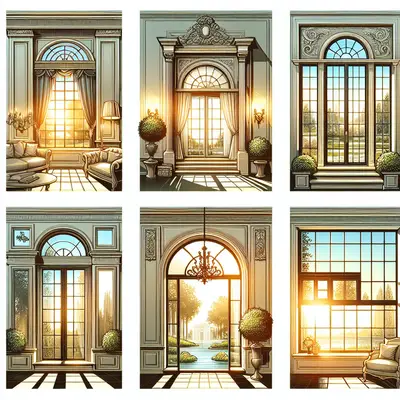
Casement windows, with their clean vertical lines and unobstructed panes, echo the precision of contemporary and transitional architecture. They create a subtle sense of movement, opening like a discreet door to the outdoors. In contrast, double-hung windows are the tailored classics of the window world—timeless, balanced, and historically appropriate in colonials, brownstones, and traditional townhomes.
Picture windows and fixed units act almost as framed art, particularly when scaled generously. They suit minimalist interiors that let the landscape serve as the primary decor. Awning windows, often running in low bands or high clerestory placements, offer a more architectural, horizontal gesture that pairs beautifully with mid-century or modern coastal designs.
The most refined window upgrades honor the original architectural intent while quietly modernizing performance. The goal is not to erase a home’s DNA, but to express it with more precision and restraint.
Beyond the Obvious: Function Hidden Inside Form
Behind each window type lies a distinct functional profile—subtle differences that profoundly affect daily living.
Casement windows excel in capturing breezes, acting almost like a sail that can be angled toward prevailing winds. They are ideal for spaces where natural ventilation is a priority, such as kitchens or ocean-facing rooms. Double-hung windows, while slightly more segmented visually, offer nuanced control of airflow by opening both the top and bottom sashes—allowing warm air to escape above while drawing cooler air inward below.
Awning windows maintain ventilation even in light rain, thanks to their outward tilt—perfect for spa bathrooms or bedrooms where you prefer fresh air without weather intrusion. Sliding windows provide wide, low-profile openings that work especially well where you want expansive horizontal views but limited outward projection, such as over patios and walkways.
When evaluating types, it’s worth mapping their operational strengths to how you actually live in each room: which spaces host evening gatherings, where you read, where you cook, where privacy matters, and which views deserve to be theatrically revealed rather than casually exposed.
Exclusive Insight 1: “View Architecture” Matters as Much as Window Style
Homeowners often choose window types based on façade aesthetics alone, but sophisticated upgrades begin with “view architecture”—the deliberate composition of what each window frames, hides, or reveals.
A large picture window in a living area may seem like an obvious luxury move, yet the true refinement lies in how mullion lines intersect the view. Slim-framed casement or tilt‑turn units ganged together can provide similar expanses of glass, but with the advantage of ventilation and intentional vertical rhythm that can align with sightlines, trees, or distant architectural landmarks.
In bedrooms, the finest solutions often prioritize layered views: a lower sill height to bring the garden into eye level when seated, combined with higher clerestory or transom windows that admit light while preserving privacy. In stairwells, tall, narrow windows can edit the exterior scene into elegant vertical “panels” of sky or canopy, turning a circulation space into a gallery of changing light.
Choose window types not just by their catalog labels but by the specific way they control composition—deciding what becomes artwork, what remains background, and what is purposefully left unseen.
Exclusive Insight 2: Different Window Types “Behave” Differently Under Wind and Weather
Every window type interacts with weather in its own way—details that become crucial in coastal, high-wind, or exposed locations.
Casement and awning windows, which compress their seals tighter under wind load when closed, can offer exceptional air tightness when specified with quality hardware and gaskets. In contrast, traditional double-hung windows may require more meticulous manufacturing and installation to match that level of performance, particularly in older or historic profiles.
In regions prone to storms, impact-rated casement or fixed windows often outperform more segmented configurations in both strength and simplicity. Meanwhile, tilt-turn windows—a European favorite that can tilt inward for ventilation and swing open for full access—offer an intriguing blend of security, weather protection, and versatility, especially in upper floors where cleaning from the inside is valued.
Understanding how each type responds to pressure, driving rain, and temperature extremes allows you to pair the right form with the climate realities of your site, rather than relying on generic, one-size-fits-all solutions.
Exclusive Insight 3: Sash Lines and Mullions Quietly Shape Interior Design
The geometry of each window type will either support or compete with your interior design.
Double-hung windows introduce a horizontal division across each opening, which can be leveraged to align with chair rails, picture moldings, or cabinetry heights for a thoughtfully integrated look. Casement and fixed windows, particularly with larger glass areas, lend themselves to minimalist interiors where continuous sightlines and unbroken surfaces are part of the desired aesthetic.
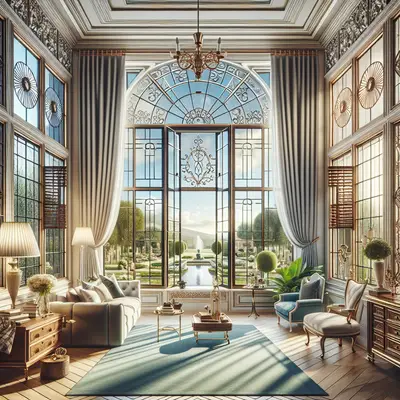
Mullion and grille designs—whether simulated divided lites, true divided lites, or entirely clear expanses—interact directly with scale. In a small room, too many divisions can feel fussy. In a large, formal space, deliberately proportioned grids can lend gravitas and architectural weight. Narrow-framed, large-format sliding or lift-and-slide units blur the line between indoors and out, effectively extending the living room into terraces and gardens.
As you select window types, consider not just the exterior elevation but the way their structural rhythm will sit behind your furnishings, artwork, and lighting. The most refined interiors often begin with window geometry as a foundational design decision, not an afterthought.
Exclusive Insight 4: Operational Styles Influence Acoustics and Quiet Luxury
Sound control is rarely discussed at the level of window type, yet it can subtly differentiate a home that merely looks upscale from one that genuinely feels serene.
Casement and tilt‑turn windows, with their continuous compression seals, tend to provide superior acoustic performance compared with many sliding or older double-hung configurations, especially when paired with laminated glass. Fixed windows, of course, offer the quietest profiles, making them ideal for spaces where opening is unnecessary but calm is essential—formal dining rooms oriented toward a busy street, for example.
Awning windows placed higher on the wall can introduce soft, diffuse natural sounds—rustling trees, distant ocean—without the harsher noise from street level, especially when used in combination with more acoustically robust fixed units below. Large-format sliding doors, when carefully specified with advanced glazing and premium tracks, can deliver impressive sound reduction, but the quality of the system becomes critical at this scale.
Thinking of each window as an instrument in an acoustic composition—some open and tunable, others quietly sealed—allows you to orchestrate a home that sounds as refined as it looks.
Exclusive Insight 5: Different Types Age Differently—And That Affects Long-Term Elegance
Window choice is not only about how they look the day they’re installed, but how gracefully they will age.
Hardware-laden operable windows such as casements require periodic attention to hinges, operators, and seals, particularly in coastal or high-humidity areas. Opting for marine-grade finishes and higher-spec components can drastically extend their smooth performance and visual appeal. Double-hung windows, especially those with traditional wood exteriors, reward homeowners who appreciate the patina of well-maintained materials and are willing to invest in periodic refinishing.
Fixed windows and minimal-frame sliders tend to age visually with notable elegance, as there is often less exposed hardware and fewer moving parts. In ultra-modern homes, these types can preserve the purity of the original design line with minimal maintenance, provided the framing and finishes are thoughtfully chosen.
From a long-term value perspective, mixing types with intention—more durable fixed units in highly exposed areas, operable windows strategically placed where they will be used and appreciated—can deliver a home that remains visually coherent and mechanically reliable for decades, rather than drifting into uneven wear and aesthetic fatigue.
Curating a Cohesive Vocabulary of Window Types
The most successful window upgrade projects rarely rely on a single window type throughout the home. Instead, they assemble a cohesive, edited palette: perhaps double-hung windows on the street-facing elevation for architectural authenticity, slimmer casements on the garden side to maximize views, and generous fixed panels or sliders in main living areas to dissolve the boundary between inside and out.
Think of each window type as a distinct yet related character in a narrative: some formal, some relaxed, some dramatic, some almost invisible. When chosen with designer intent—view composition, climate, acoustics, interior geometry, and aging in mind—the result is not just better windows, but an upgraded atmosphere.
Elevated window solutions emerge not from default selections, but from a quiet insistence on harmony: between architecture and landscape, between interior and exterior, and ultimately, between how your home looks and how it feels to live within its light.
Sources
- U.S. Department of Energy – Efficient Windows - Overview of window design considerations, energy performance, and basic window types
- Efficient Windows Collaborative (National Fenestration Rating Council) - Detailed explanations of common window operating types and their performance characteristics
- AIA – Residential Window Selection Considerations - Professional guidance on aligning window choices with architecture, climate, and performance
- Berkeley Lab – Windows and Daylighting - Research-based information on window performance, comfort, and daylighting strategies
- Marvin Windows & Doors – Window Types Guide - Manufacturer perspectives on window styles, operations, and design applications
Key Takeaway
The most important thing to remember from this article is that this information can change how you think about Window Types.