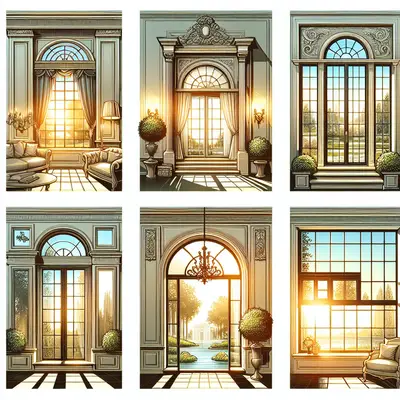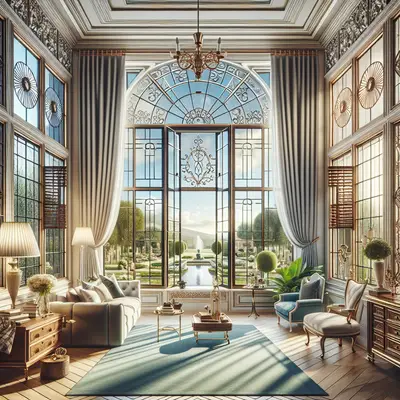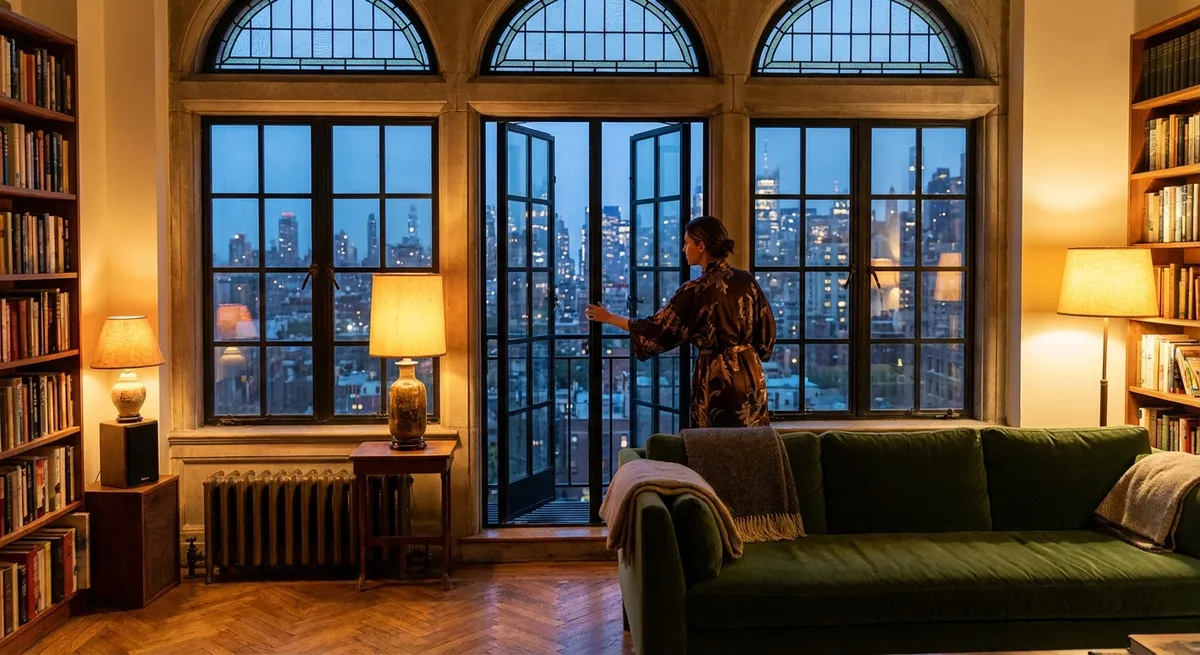
Windows are far more than openings in a wall; they are architectural decisions that choreograph light, frame landscape, and softly dictate how a home is experienced. For the discerning homeowner, choosing window types becomes less about “what fits” and more about “what elevates.” Each style carries its own rhythm of movement, profile of light, and subtle influence on comfort and value.
This guide explores window types through a more curated lens—with five exclusive, under-discussed insights that sophisticated homeowners often uncover only after the renovation dust has settled.
Reading the Room: Matching Window Types to Architectural Intent
Before comparing catalogs, begin with the architecture itself. Every home has an inherent visual language; the most successful window upgrades refine that language instead of rewriting it.
In a stately brick colonial, double-hung windows with slender muntins preserve the vertical rhythm of the façade, while low-profile casements might feel visually “quiet” but subtly at odds with the home’s historical posture. By contrast, a mid-century modern property often comes alive with expansive fixed windows paired with narrow, horizontal sliders or awning windows that emphasize long sightlines and a grounded connection to the landscape.
Contemporary homes tend to favor large fixed or casement units with minimal frames to create uninterrupted glass planes—particularly effective when paired with polished concrete, slim-profile railings, and neutral interiors. Traditional homes, however, benefit from the articulation created by divided lites and slightly more substantial framing, which impart depth and shadow.
The aim is not to mimic the past but to refine it. Judicious use of mixed window types—such as pairing operable casements with dramatic fixed picture windows—can modernize performance while maintaining a home’s architectural integrity. A thoughtful designer will “read” your home first, then specify window types that feel inevitable rather than imposed.
Operability as Experience: How Each Window Type Changes Daily Life
Beyond appearance, the way a window opens changes your daily rituals: how you ventilate after cooking, how you listen to rainfall, how you secure your home at night.
Casement windows, hinged at the side, excel where you want responsive ventilation and clear sightlines. They capture cross-breezes effectively and seal tightly when closed—ideal for kitchens facing gardens or upper floors exposed to wind. Awning windows, hinged at the top, create a sheltered opening that can often stay slightly ajar during light rain, enabling continuous fresh air in bedrooms or bathrooms.
Double-hung windows preserve a more classic aesthetic and offer flexible ventilation by lowering the top sash while raising the bottom—subtly more secure and highly practical in children’s rooms. Sliding windows and gliding patio doors suit modern, linear spaces where a low profile and unencumbered horizontal movement are paramount.
Fixed windows, of course, do not open—but they transform how you experience daylight and view. When composed thoughtfully with operable companions (such as flanking casements or clerestory awnings above), they create luminous walls of glass that remain energy efficient and comfortable year-round.
Consider your routines: where you read, where you entertain, where you cook late into the evening. Map those habits against operability. The most successful window schemes treat opening mechanisms as part of the choreography of daily life, not an afterthought.
Exclusive Insight 1: “Visual Weight” Matters as Much as Size
Homeowners often focus on window dimensions and forget a subtle but crucial factor: visual weight. Two windows of identical size can have completely different presences based on frame thickness, sash design, divided lites, and color.
Slim-framed aluminum or fiberglass casements, especially in darker hues, can visually “disappear,” making the view the focal point. This is particularly powerful in rooms with strong landscape features—a sculptural tree, a city skyline, or an ocean horizon. In contrast, deeper wood or composite frames, especially in lighter tones, add intentional structure to the wall, framing the view like art.
Double-hung windows typically read “heavier” because of their horizontal meeting rail, which can be either a feature (reinforcing traditional character) or an intrusion (interrupting a coveted view). Fixed picture windows feel visually lighter, though they require complementary operable units nearby to ensure comfort and good air exchange.
When planning upgrades, assess not only how large your new windows will be, but how assertive or recessive you want them to appear in the composition of the room. Visual weight can be tuned by frame material, color, and grid patterns to create either a gallery-like serenity or a more articulated, classic charm.
Exclusive Insight 2: Strategic Mixing of Window Types Enhances Both Comfort and Aesthetics
Many homeowners feel pressured to select one dominant window type for the whole house, but sophisticated projects often rely on an intentional mix—curated, not chaotic.
In a south-facing living room, a large fixed window can serve as a luminous centerpiece, with slim casements on either side to manage airflow. In bedrooms, awning windows high on the wall preserve privacy while admitting air and light—especially effective when layered above a more traditional fixed or double-hung unit.
On façades facing the street, double-hung or casement windows with divided lites can maintain a coherent exterior rhythm that respects neighborhood character, while on the garden side, more expansive fixed and sliding units indulge in modern openness. The result is a home that presents dignified restraint outwardly and expressive transparency inwardly.
The key is continuity in proportion and alignment. Sill heights, head heights, and mullion lines should relate to each other across different window types, giving the elevation a quiet order even when the operability varies. A carefully mixed palette of types delivers both comfort and character, without visual noise.
Exclusive Insight 3: Ventilation Patterns Are as Important as U-Values
Energy performance metrics—U-factor, solar heat gain coefficient (SHGC), and visible transmittance—are essential, but luxury comfort extends beyond lab values into real-world airflow.
Casement and awning windows can “scoop” breezes more effectively than sliders in many orientations, particularly when hinged to catch prevailing winds. Placing operable units at different heights encourages natural convection: cooler air in at lower openings, warmer air vented through higher operable clerestories or transoms.
Double-hung windows offer a unique opportunity: lowering the top sash while raising the bottom creates a gentle vertical air loop, particularly pleasing in tall-ceilinged rooms. Awning windows near ceilings in bathrooms and stairwells can quietly extract humidity without relying solely on mechanical fans.
When planning your upgrade, think about pressure and flow: Which side of the house typically receives wind? Where does hot air tend to accumulate? Strategically distributing different operable types to manage these patterns can reduce reliance on HVAC systems, making the home feel naturally temperate, not merely mechanically conditioned.
Exclusive Insight 4: Window Type Influences Soundscape as Much as View
For homes in urban or high-traffic environments, the choice of window type meaningfully shapes interior acoustics.
Fixed windows, by virtue of having no operable seams, often provide superior sound control when paired with the right glazing. Casements can also perform exceptionally well because their sash presses tightly against the frame when closed, creating a strong seal that resists both air and noise infiltration.
Sliding windows and many older double-hung designs are more prone to micro gaps over time, modestly increasing sound transmission unless carefully specified with high-quality weatherstripping and upgraded glazing. In quieter, more rural environments, this may be a minor concern; on a busy street or near an active outdoor entertainment space, it becomes central to the experience of the home.
For sound-sensitive rooms—study, nursery, primary bedroom—prioritizing window types that seal firmly (fixed, casement, well-engineered tilt-and-turn) in combination with acoustic glazing can transform a space into a private retreat, even in the heart of the city.
Exclusive Insight 5: Interior Detailing Should Guide Exterior Choice
Most homeowners evaluate windows from the outside in. Sophisticated projects reverse this: they begin with the interior experience and allow that clarity to inform exterior expression.
Consider how window types interact with your interior architecture. Deep wood-clad frames can function as built-in ledges for sculpture or plants. Tall, narrow casements can echo vertical wall paneling or fluted cabinetry. Large fixed windows with low sills create an almost gallery-like display of the outdoors, especially effective in minimalist interiors where decor is restrained.
Tilt-and-turn windows, more common in European design, offer intriguing interior advantages: inward-opening modes facilitate easy cleaning, discreet ventilation, and an almost door-like presence in certain spaces. In rooms with substantial window treatments, the path of operable sashes (in-swing vs. out-swing, slide vs. tilt) will influence how drapery is designed and mounted.
By first defining how you want the room to feel—intimate and cocooned, or open and gallery-bright—you can then select window types that support that vision. The exterior composition becomes a refined consequence of interior intentionality, rather than a constraint.
Material and Type: Pairings That Elevate Performance and Style
Different window types naturally harmonize with specific frame materials, each contributing its own tactile and visual character.
Wood and wood-clad windows in double-hung or classic casement forms feel at home in historic or transitional properties, offering warmth and depth, especially when paired with finely detailed interior trim. Aluminum and aluminum-clad frames, particularly in slender casement or fixed configurations, suit contemporary projects that demand narrow sightlines and crisp edges.
Fiberglass frames, structurally stable and low maintenance, perform elegantly across many window types, especially where large fixed or casement units are used in demanding climates. Vinyl, while often more value-oriented, has evolved in design and can comfortably support sliders and single- or double-hung windows in less architecturally formal settings.
The most refined solutions do not merely chase trends; they reconcile material honesty, environmental exposure, and window type in a way that feels quietly inevitable—luxurious not because it is loud, but because it is so precisely appropriate.
Conclusion
Selecting window types for an elevated home is ultimately an exercise in nuance: balancing operability with aesthetics, performance with atmosphere, and architectural heritage with contemporary comfort. When approached thoughtfully, each window becomes a deliberate gesture—directing light, framing view, managing sound and air, and shaping how you inhabit each room.
By considering visual weight, strategic mixing, ventilation patterns, acoustic impact, and interior-driven detailing, you move beyond “standard replacement” into genuine architectural curation. The result is not simply better windows, but a home that feels more composed, more tranquil, and more attuned to the way you truly live.
Sources
- U.S. Department of Energy – Energy-Efficient Windows - Overview of window types, energy performance, and design considerations
- Efficient Windows Collaborative (NFRC) - Detailed breakdown of window operating types and their performance implications
- University of Minnesota Extension – Choosing Windows - Guidance on matching window styles to climate, ventilation, and orientation
- Pella – Window Styles Explained - Manufacturer insight into functional and aesthetic differences between common window types
- Marvin – Understanding Window and Door Types - Practical discussion of how different window operations affect design and daily use
Key Takeaway
The most important thing to remember from this article is that this information can change how you think about Window Types.