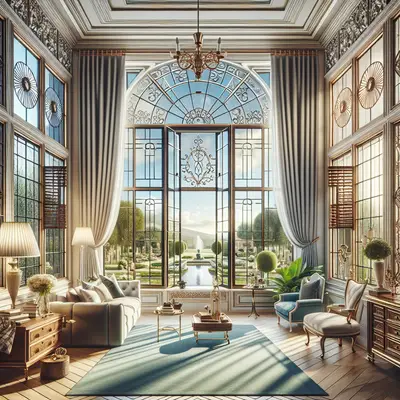
The most refined homes are not defined merely by square footage or finishes, but by the way they engage with light, landscape, and atmosphere. Windows are the architectural instruments that conduct this experience—framing views, orchestrating daylight, and mediating comfort. Selecting the right window types is not a matter of default catalog choices; it is a deliberate act of curation. For homeowners pursuing elevated upgrades, understanding how form, function, and performance converge across window types is essential to creating a home that feels both effortlessly luxurious and impeccably considered.
Understanding Window Types as Architectural Statements
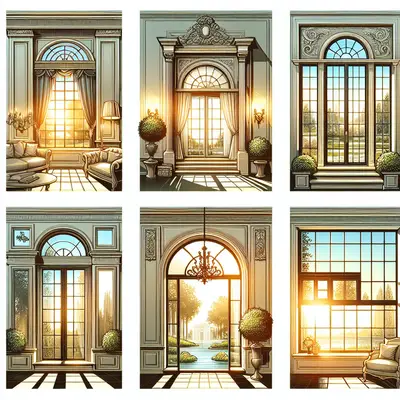
Window types—casement, awning, picture, sliding, double‑hung, tilt‑turn, bay, bow, and more—do more than open and close. Each embodies a distinct architectural language and behavioral pattern in daily use. A tall, narrow casement window with slim framing can evoke European modernism; a generous bay can introduce a sense of occasion in a living room; a low, wide awning window can feel quietly minimalist yet purposeful in a spa bathroom.
Equally important is how these types interact with the home’s structure. Large picture windows demand a different engineering strategy from operable units. Tilt‑turns suggest a particular rhythm of ventilation, while sliders speak to unobtrusive, horizontal movement. Sophisticated window planning starts by mapping how each façade should feel and function throughout the day—then assigning window types as architectural “punctuation marks” that bring that vision to life.
Exclusive Insight 1: Curating a Window “Portfolio” Instead of a Single Default
Most homes default to one dominant window type throughout, often double‑hung or sliders. While this is economical, it rarely produces a truly elevated outcome. Discerning homeowners think in terms of a window portfolio—an intentionally varied ensemble where each type is chosen for its contextual strengths.
In practice, this may mean specifying tilt‑turn windows in main living areas for expansive openings and easy cleaning, casements in bedrooms for secure night‑time ventilation, and fixed picture windows in view‑driven spaces where uninterrupted glass is paramount. Accent areas—such as a stairwell, reading nook, or gallery wall—might feature architectural windows (arched, corner, or clerestory units) to provide visual drama and curated light without visual clutter.
This portfolio approach balances aesthetics, performance, and daily usability. It also enables nuanced upgrades: you can invest in higher‑spec operable units where you truly live, while using elegantly simple fixed windows in secondary zones. The result is a home that feels tailored, not templated.
Exclusive Insight 2: Pairing Window Type with Climate‑Smart Performance
Not all window types perform equally in every climate, even when they share similar glass specifications. In windy, coastal, or exposed locations, casement and awning windows—hinged and compressed tightly by wind against their seals—often outperform sliders or traditional double‑hung units in terms of air leakage and resistance to drafts. In milder climates, the difference may be subtler; in harsher conditions, it can be profound.
Operability type also influences how effectively you can manage passive comfort. Awning windows excel in light rain, allowing ventilation without water intrusion. Tall tilt‑turn units in the “tilt” position can bring in high‑level fresh air while preserving privacy. Large fixed picture windows, when paired with high‑performance glazing and proper shading, can capture winter solar gain in colder regions or, conversely, admit controlled, glare‑free light in sunnier climates.
The most refined upgrade strategies consider how each window type will interact with wind patterns, sun paths, and seasonal temperature swings on that specific site. Thoughtful pairing of type and performance reduces reliance on mechanical heating and cooling, elevating both comfort and environmental responsibility.
Exclusive Insight 3: Sculpting Light and Privacy Through Type, Not Just Glass
While glass coatings and tints receive significant attention, window type itself exerts strong influence over how light and privacy are experienced. The height, width, and operable portions of different window types create distinct patterns of daylight and sightlines that can be elegantly orchestrated.
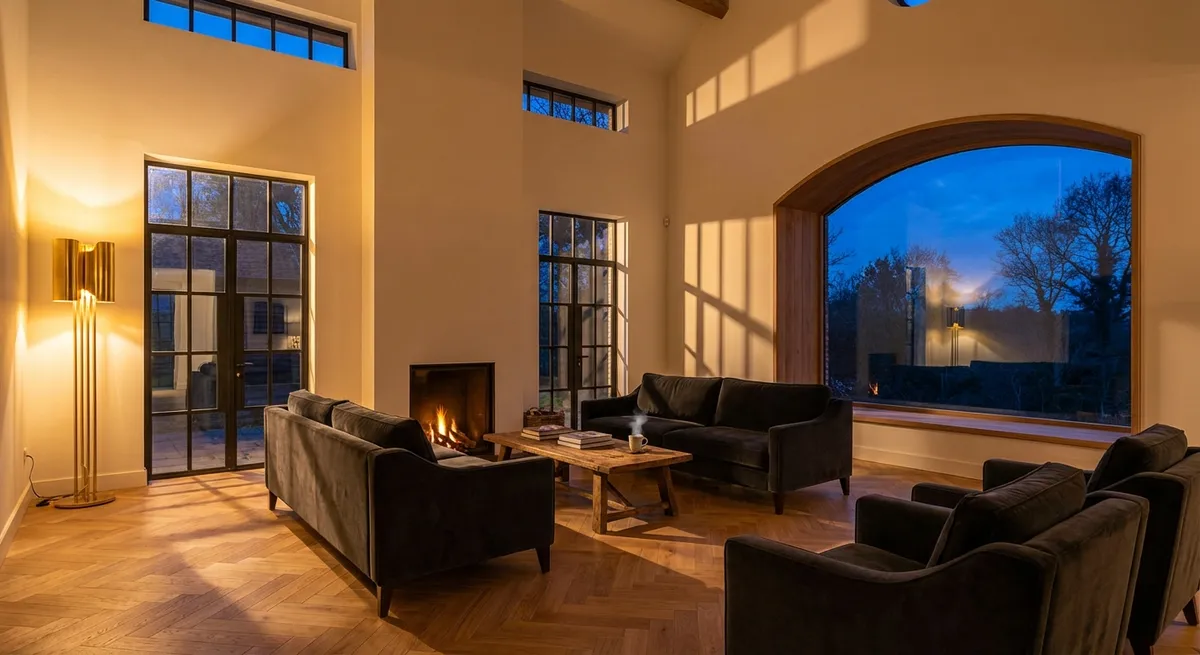
Clerestory windows, for example, introduce high, diffuse light that washes ceilings and walls, perfect for maintaining privacy in urban settings while avoiding glare. Slim vertical casements flanking a fixed picture window can deliver adjustable side light and ventilation without sacrificing the central view. Awning windows placed low on a wall can frame landscaped foregrounds while keeping neighbors’ windows discreetly out of sight. Narrow, stacked windows can yield a lantern‑like glow in hallways without exposing the interior.
Instead of defaulting to uniform, eye‑level rectangles, sophisticated homeowners analyze: What do I want to see from each room? How should the light fall at different times of day? Where should the outside world feel close—and where should it feel almost abstract? Window type becomes the toolset for sculpting this interplay of openness and discretion.
Exclusive Insight 4: Harmonizing Frame Profiles with Interior Design Intent
Many homeowners focus on glass specifications and overlook the profound aesthetic impact of frame profiles and how they vary by window type. The slender lines of an aluminum‑clad casement will interact very differently with an interior than the more substantial, traditional framing of a double‑hung or the crisp symmetry of a tilt‑turn.
For homes with a minimalist, gallery‑like sensibility, large fixed and casement units with thin, consistent sightlines can create an almost frameless effect—allowing art, furnishings, and landscape to take center stage. In a more classic or transitional environment, double‑hung or simulated divided‑light casement windows can reinforce architectural rhythm and proportion, aligning with millwork, paneling, and traditional trims.
Critical to a premium outcome is maintaining coherence: even when mixing types, align mullion thicknesses, rail heights, and finish colors. For example, ensuring that the “meeting rail” height of double‑hung units aligns with horizontal mullions in adjacent fixed or casement windows keeps sightlines harmonious. When done well, the eye reads a unified composition, not a collage of disparate parts.
Exclusive Insight 5: Anticipating Future Lifestyles with Adaptive Window Types
Sophisticated window selection looks beyond immediate preferences to anticipate how spaces may need to adapt over years or decades. Certain window types can quietly future‑proof a home by supporting aging in place, evolving family structures, and changing patterns of use.
For instance, large sliders or lift‑and‑slide doors that blur the boundary between indoor and outdoor living can later accommodate reduced mobility, avoiding thresholds that impede wheelchairs or walkers. Tilt‑turn windows offer secure “tilt” ventilation that may become increasingly valuable as occupants prioritize safety or wish to avoid wide‑open sashes on upper stories. Low‑profile awnings in bathrooms or utility rooms can provide continuous, secure ventilation even when rooms are used differently over time.
Window types that facilitate easy cleaning from the interior—such as tilt‑turns or certain double‑hung models—gain importance as household help patterns change or as occupants prefer low‑maintenance routines. By choosing types that are both beautiful and adaptive, you create a home that remains gracious and functional through life’s inevitable transitions.
Blending Iconic Types for Signature Spaces
Beyond fundamentals, inspired window design treats certain rooms as signature environments. A bay or bow window in a reading room, framed with deep, upholstered seating, can become a home’s emotional anchor. Corner windows—where two large fixed or casement units meet with minimal structure—can dissolve boundaries and make even modest rooms feel architecturally daring.
In kitchens, a sequence of casements or awnings can deliver fine‑tuned control over breezes and cooking odors while visually extending the counter line into the landscape. In primary suites, pairing a large fixed picture window behind a freestanding bathtub with flanking operable units can create a spa‑like sanctuary where light, privacy, and ventilation are all meticulously choreographed.
These gestures rely on a nuanced mix of window types, not a single system repeated everywhere. The most memorable homes feel as though each opening was drawn, not simply specified—a quiet yet unmistakable sign of elevated design thinking.
Conclusion
Choosing window types for an exceptional home is less about conforming to standard catalogs and more about conducting a symphony of light, air, view, and comfort. By curating a diverse window portfolio, aligning types with climate and performance, sculpting privacy through form, harmonizing frame profiles with interior character, and anticipating future lifestyles, homeowners can transform windows from background necessities into defining features of a truly sophisticated residence.
Thoughtful window type selection is an investment not only in aesthetics, but in daily experience—how morning light enters a bedroom, how a storm feels from the living room, how a quiet evening unfolds by a bay of glass. When each opening is chosen with intention, the result is a home that feels effortlessly resolved, exquisitely composed, and enduringly modern in its comfort and grace.
Sources
- [U.S. Department of Energy – Energy‑Efficient Windows](https://www.energy.gov/energysaver/design/energy-efficient-home-design/energy-efficient-windows) - Overview of window types, performance considerations, and climate‑appropriate choices
- [Efficient Windows Collaborative (National Fenestration Rating Council)](https://www.efficientwindows.org/types-of-windows/) - Detailed descriptions of common window types and their performance characteristics
- [American Architectural Manufacturers Association (AAMA)](https://www.aamanet.org/pages/homeowners/window-and-door-selection) - Guidance on selecting window and door systems with attention to design, performance, and durability
- [University of Minnesota – Center for Sustainable Building Research](https://www.csbr.umn.edu/publications/windows-and-daylighting) - Research and resources on windows, daylighting, and their impact on comfort and energy
- [Marvin Windows & Doors – Window Types Guide](https://www.marvin.com/blog/types-of-windows) - Manufacturer overview of window types with visual examples and design applications
Key Takeaway
The most important thing to remember from this article is that this information can change how you think about Window Types.