The right window is never merely an opening in a wall; it is a calibrated instrument for light, proportion, comfort, and quiet luxury. For the discerning homeowner, choosing window types is less about catalog options and more about composing an architectural narrative—one that feels deliberate, serene, and enduring. This guide explores window types through a refined lens, with five exclusive insights that help elevate your selection from functional decision to considered design statement.
Reading the Architecture: Let the House Dictate the Window
Before comparing casement versus double-hung, begin with the architecture itself. A thoughtfully chosen window type should appear inevitable—perfectly at ease with the home’s lines, rhythms, and materials.
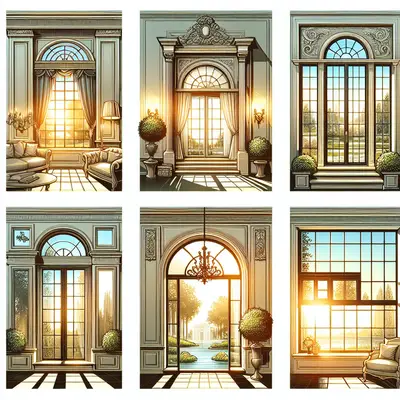
Traditional homes (Colonial, Georgian, Tudor, Craftsman) typically favor vertically oriented, divided-light profiles—double-hung or classic casements that echo historic proportions. Contemporary and modern residences, by contrast, often demand expansive panes, minimal framing, and operable units that appear almost invisible when closed, such as large fixed windows paired with slim casements or tilt-turns.
Consider:
- Mullion patterns that align with façade symmetry
- Sill heights that correspond to interior furniture layouts
- Head heights that line up consistently across elevations
Treat window type as an extension of the architecture’s vocabulary, not an afterthought. When the language is coherent, the entire façade reads as composed rather than assembled.
The Quiet Mechanics of Operation: Beyond Open and Shut
Operation type is more than a matter of preference; it shapes how you live with your windows every day—how you ventilate, access views, and maintain them.
- Casement windows open like doors on a hinge, catching breezes and offering near-unobstructed views. Their compression seals can provide excellent air tightness, making them a sophisticated choice for high-performance envelopes.
- Double-hung windows slide vertically, ideal for classic façades and spaces where a projecting sash would interfere with pathways, terraces, or landscaping.
- Tilt-turn windows, a hallmark of European design, offer two modes: tilt inward from the top for gentle ventilation, or swing in fully for maximum airflow and effortless cleaning.
- Awning windows hinge at the top and open outward, sheltering openings from light rain and pairing beautifully with fixed picture windows for a curated, layered façade.
Refined design considers not just how a window looks in photos, but how it actually behaves: the arc of its swing, the way hardware feels in hand, the ease with which it closes, and whether it encourages or discourages everyday use.
Exclusive Insight #1:
In luxury projects, architects often mix window types strategically on the same elevation—tilt-turns in upper levels for effortless cleaning, casements in primary rooms where aligned sightlines matter, and fixed units where the view is paramount and ventilation is addressed elsewhere. The result is a façade that appears serene yet is meticulously tuned to lived experience.
Framing the View: Matching Window Type to Landscape and Light
Windows are curators of the world beyond your walls. Different window types frame that world in subtly different ways.
- Picture windows are ideal where the view is the main event—mountains, water, skyline, or a sculpted garden. Because they don’t open, their frames can be slimmer, and their performance often superior, making them ideal for large-scale glazing.
- Sliding windows and doors create a horizontal, cinematic frame. They are particularly effective where the landscape is expansive and low—coastlines, vineyards, or broad lawns.
- Bay and bow windows extend into the exterior, creating a gentle projection that both captures wider angles of view and carves out intimate interior niches for seating or display.
- Corner windows (often a combination of fixed and operable units) dissolve boundaries, especially in modern architecture, allowing light to wrap into the space and views to unfold beyond the conventional frame.
Light quality matters as much as the view itself. In north-facing rooms, broad picture or fixed windows with adjacent operable units can harvest soft, consistent light. South-facing rooms may pair large glazed areas with operable awning or casement windows for controlled cross-ventilation, while deep eaves or shading devices temper solar gain.
Exclusive Insight #2:
High-end residences frequently use a “view hierarchy” strategy: primary rooms receive large, minimally broken apertures (fixed plus hidden operables), while secondary spaces employ more traditional window types with divided lites. This maintains a sense of architectural continuity while subtly emphasizing the most important rooms.
Tactile Luxury: Profiles, Sightlines, and Hardware as Design Jewelry
In elevated window design, refinement lies in the details that are often only apparent up close: the thickness of the frame, the crispness of corners, the feel of the handle, the quietness of the latch.
Consider:
- Sightlines: Slimmer profiles increase glass area and sophistication. Steel or aluminum-clad systems can achieve razor-thin frames, while premium wood or composite frames can conceal structural depth within the wall.
- Profiles and reveals: Flush or shadow-revealed frames at the interior add a gallery-like quality, especially in contemporary spaces. Traditional interiors may favor more articulated trims and casings that harmonize with millwork.
- Hardware: Multipoint locks, solid metal levers, and thoughtfully placed handles can transform the experience of operating a window. In luxury projects, hardware is often specified to coordinate with door sets and cabinetry for a seamless, curated whole.
Exclusive Insight #3:
Top-tier designers often specify different interior and exterior personalities for the same window type—sleek, minimal frames on the exterior for a clean façade, paired with slightly warmer or more articulated interior finishes that resonate with furnishings. The window becomes a subtle mediator between architecture and interior design.
Climate Intelligence: Pairing Window Types with Performance Goals
Superb aesthetics are incomplete without equally refined performance. Certain window types inherently lend themselves to higher energy efficiency and comfort when paired with the right glazing and installation strategy.
- Casement and awning windows typically seal more tightly than sliders or single-hung units due to their compression seals, which can be advantageous in demanding climates.
- Fixed windows (paired with strategically placed operable units) minimize air leakage and can support larger dimensions within performance targets.
- Tilt-turn systems are a favorite in high-performance and Passive House–inspired projects, where their robust hardware and gasket systems help achieve exceptional airtightness.
Layer in glazing and coatings:
- Low-E coatings tailored to climate and orientation modulate solar heat gain while preserving clarity.
- Double or triple glazing enhances thermal and acoustic comfort, especially in urban or harsh-climate settings.
- Gas fills (argon, krypton) and warm-edge spacers improve insulating performance in premium assemblies.
Exclusive Insight #4:
In sophisticated projects, window type and glass specification are often varied by orientation rather than standardized across the home. South and west façades may feature operable types with more selective solar-control glazing, while north and east elevations lean on larger fixed units with higher visible light transmission for luminous, gentle daylight.
Integrated Living: Coordinating Window Types with Shading and Privacy
The most successful window schemes consider not just the glass and frame, but the entire ecosystem around them: shading, privacy, acoustics, and even technology.
- Exterior shading (brise-soleil, louvers, overhangs) can be architecturally integrated with fixed and casement windows to temper intense sun without compromising elegance.
- Interior treatments—sheers, Roman shades, recessed tracks—should be anticipated early so that window types and heights align with desired drapery effects.
- Obscure or satin-etched glass works beautifully in bathrooms or side yards, allowing full-size windows without sacrificing privacy. Casement or awning types here provide fresh air while the glazing maintains discretion.
- Acoustic considerations matter in urban or high-traffic locations; pairing tilt-turn or casement types with laminated glass can dramatically reduce noise while preserving a refined aesthetic.
Exclusive Insight #5:
In elevated residences, window types are often selected with automation in mind. Large fixed and tilt-turn combinations, or expansive sliders with concealed tracks, integrate seamlessly with motorized shades and smart-home systems. The result is choreography: light, privacy, and ventilation adjusting quietly in the background, while the architecture remains visually serene.
Conclusion
Selecting window types for a refined home is an exercise in nuance. It requires balancing architectural intent, daily rituals, climate realities, and the subtle pleasures of material, light, and tactility. When each window type is chosen with purpose—how it opens, what it frames, how it feels, and how it performs—the home transcends function and enters a realm of quiet, enduring luxury.
Thoughtful curation of casements, double-hungs, tilt-turns, picture windows, and more is not about following a formula, but about composing a cohesive, livable, and beautifully illuminated whole. In that composition, windows cease to be mere building components; they become the lenses through which your home experiences the world—and through which the world experiences your home.
Sources
- [U.S. Department of Energy – Windows, Doors, and Skylights](https://www.energy.gov/energysaver/windows-doors-and-skylights) - Overview of window types, energy performance, and selection considerations
- [Efficient Window Coverings – Window Orientation Guide (U.S. DOE & LBNL)](https://guide.efficientwindowcoverings.org/guide/window-orientation/) - Insight into how orientation and design choices affect comfort and performance
- [National Fenestration Rating Council (NFRC)](https://www.nfrc.org/products/windows-doors-and-skylights) - Explains performance ratings that vary by window type and construction
- [University of Minnesota Extension – Window Selection](https://extension.umn.edu/windows-and-doors/window-selection) - Educational resource on matching window types to climate and usage
- [Marvin Windows & Doors – Window Types](https://www.marvin.com/windows/window-types) - Manufacturer’s catalog illustrating various window operations and design applications
Key Takeaway
The most important thing to remember from this article is that this information can change how you think about Window Types.