Windows are no longer mere openings in a wall; in a discerning home, they are architectural signatures. The right window type can recalibrate light, reframe views, and subtly elevate daily rituals—morning coffee, evening reflection, weekend gatherings. For homeowners considering an upgrade, the decision is less about “what fits the hole” and more about “what refines the experience.”
This guide explores window types through a cultivated lens, revealing five exclusive insights that move beyond generic advice and into the realm of considered, long-term elegance.
Understanding Window Typology as Architectural Language
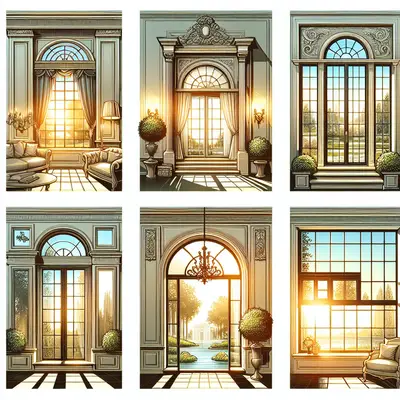
Selecting a window type is akin to choosing a dialect for your home’s architecture. Casement windows, with their side-hinged swing, read as crisp and contemporary, ideal for curated modern spaces that favor clean sightlines and controlled ventilation. Double-hung windows—sashes gliding gracefully past one another—evoke traditional character and are particularly compatible with historic or transitional façades.
Picture windows, expansive and unapologetically still, operate more as framed art than operable units, ideal for properties with a commanding view or a carefully composed garden. Sliding windows introduce a horizontal rhythm that suits mid-century or coastal aesthetics, where the goal is relaxed openness rather than formal symmetry. Specialty shapes—arched, trapezoidal, or clerestory bands—add a tailored signature, allowing the fenestration to echo rooflines, staircases, or design motifs. When understood as architectural language, the selection of window types becomes an exercise in coherence and intentionality rather than piecemeal replacement.
Insight 1: Layering Window Types for a Composed Façade
One of the most underused strategies in refined window design is the deliberate layering of multiple window types on a single elevation. Many homes default to “one-size-fits-all” window choices for the sake of simplicity, sacrificing subtlety and hierarchy. A more curated approach treats the façade as a composition: dominant, supporting, and accent apertures working together.
Consider an estate where the main living room features tall casement windows grouped in pairs, creating a formal vertical rhythm that signals importance. Above, in secondary bedrooms, double-hung windows provide ease of use and traditional familiarity without competing for visual attention. Flanking the entry, narrow fixed sidelights or slim casements quietly frame the door, introducing a slender proportion that feels tailored rather than off-the-shelf. Even minor adjustments—such as using larger, higher-placed casements in a kitchen and smaller, shielded awning windows in baths—contribute to a façade that feels orchestrated rather than accidental. Layering types in this way yields a home that appears thoughtfully edited from every angle.
Insight 2: Matching Operation to Lifestyle, Not Just Floor Plans
Window operation—how a sash opens, how far it travels, where it catches the breeze—should be chosen as carefully as a piece of furniture that you interact with daily. Conventional planning often defaults to casements over the sink and double-hung in bedrooms without questioning how the homeowner truly lives in the space.
For a family that entertains frequently with indoor-outdoor flow, large sliding or folding glass units may transform a standard dining area into a pavilion-like extension of the terrace. In a city townhouse where privacy and sunlight must co-exist, high clerestory awning windows paired with floor-level fixed panels can usher in light while protecting sightlines from the street. In a primary suite that functions as a retreat, tilt-and-turn windows—common in European design—offer dual functionality: a secure ventilation mode and a full-swing operation for generous airflow during temperate seasons. When window operation is calibrated to daily routines—morning ventilation, evening reading light, seasonal breezes—the home feels quietly customized to its inhabitants rather than generically planned.
Insight 3: Using Specialty Windows to Sculpt Light, Not Just Views
Most window decisions are made around “what one can see through them.” A more nuanced approach considers “what they do to the light.” Specialty and non-standard window types are powerful tools for sculpting daylight in refined interiors.
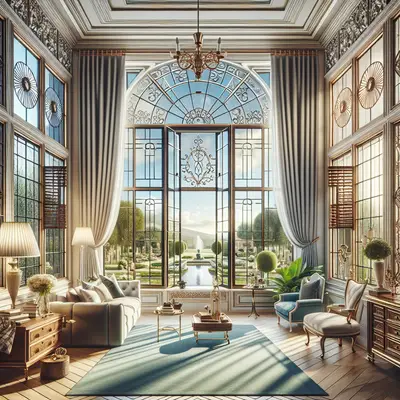
Clerestory windows, discreetly positioned near the ceiling, wash walls and ceilings with ambient light, minimizing glare while amplifying the sense of volume. In stairwells or double-height spaces, tall, narrow fixed windows or stacked units can introduce vertical shafts of daylight that trace the passing hours with quiet drama. In a reading nook or breakfast bay, a combination of a generous picture window and low flanking casements or awnings can create a luminous alcove where natural light pools gently rather than blasts in. Even small, high fixed windows in a primary bath can deliver morning light softened by distance and diffusion, allowing you to dispense with heavy window treatments. When specialty window types are chosen with the light in mind, interiors adopt a gallery-like serenity that feels both luxurious and inherently calming.
Insight 4: Harmonizing Frames and Sightlines Across Mixed Window Types
When combining different window types—casement, fixed, double-hung, sliders—the refined detail lies in the continuity of frames, sightlines, and proportions. Without this discipline, even high-end windows can read as visually fragmented.
A sophisticated strategy is to standardize key dimensions: consistent head heights, sill heights, and mullion thicknesses wherever feasible. For example, a large fixed picture window in a living room can share the same head height and frame profile as adjacent casements, creating the illusion of a cohesive system rather than a collage of parts. In multi-story façades, aligning window groupings vertically—so that second-floor windows stack gracefully above first-floor units—makes mixed window types feel intentional and architectural. Matching interior trim profiles, reveal depths, and casing widths reinforces this visual consonance. The result is a home where every aperture, despite differing operation, feels like a chapter in the same elegantly bound volume.
Insight 5: Anticipating Future Flexibility in Window Type Selection
A truly elevated window strategy considers not just present use, but plausible future scenarios: aging in place, evolving family structures, or even changing climatic patterns. Different window types offer varied advantages when viewed through a time horizon longer than a single renovation cycle.
For homeowners expecting to age in place, casement or tilt-and-turn windows can be easier to operate than heavy double-hung sashes, particularly on upper floors where reach and leverage matter. In children’s rooms, limiting operable units at low heights in favor of higher awnings or clerestories can enhance safety without sacrificing ventilation. In regions anticipating warmer summers or more frequent storms, operable units that lock tightly on multiple points—such as well-engineered casements—may offer superior performance under stress. Where future interior reconfiguration is likely, using more fixed windows in structural zones and reserving operables for flexible interior walls can make future room planning more forgiving. By selecting window types with an eye toward life’s next chapters, you avoid short-lived solutions and instead invest in a quiet, enduring resilience.
Curating the Ideal Mix for Your Home
The most successful window upgrades rarely rely on a single “hero” type. Instead, they orchestrate a palette of window types—fixed, operable, specialty—into a coherent composition that respects architecture, enhances lifestyle, and anticipates the years ahead. For the cultivated homeowner, the question is less “Which window is best?” and more “Which ensemble of window types creates the most refined experience of light, view, and comfort in this particular home?”
Approached this way, window selection becomes a design discipline rather than a checklist. The result is not only a more beautiful façade, but a more gracious way of living—one where every aperture feels considered, every view feels framed, and every room benefits from daylight that has been deliberately, elegantly curated.
Sources
- U.S. Department of Energy – Energy-Efficient Window Types – Overview of common window types and their performance characteristics
- Efficient Windows Collaborative – Window Types and Operation – Detailed breakdown of window operating styles and design considerations
- American Institute of Architects – Residential Daylighting Strategies – Professional guidance on using window placement and types to shape natural light
- Harvard Graduate School of Design – Light, Space, and Architecture – Research and coursework hub exploring how apertures and daylight influence spatial experience
- Milgard Windows & Doors – Choosing Operating Styles – Practical discussion of lifestyle, operation, and room-specific window decisions
Key Takeaway
The most important thing to remember from this article is that this information can change how you think about Window Types.